Marine Life and Wildlife of Komodo National Park
The dragons get the name recognition. The park protects a genuinely broader ecosystem, on land and in the water, that most visitors only see a fraction of.
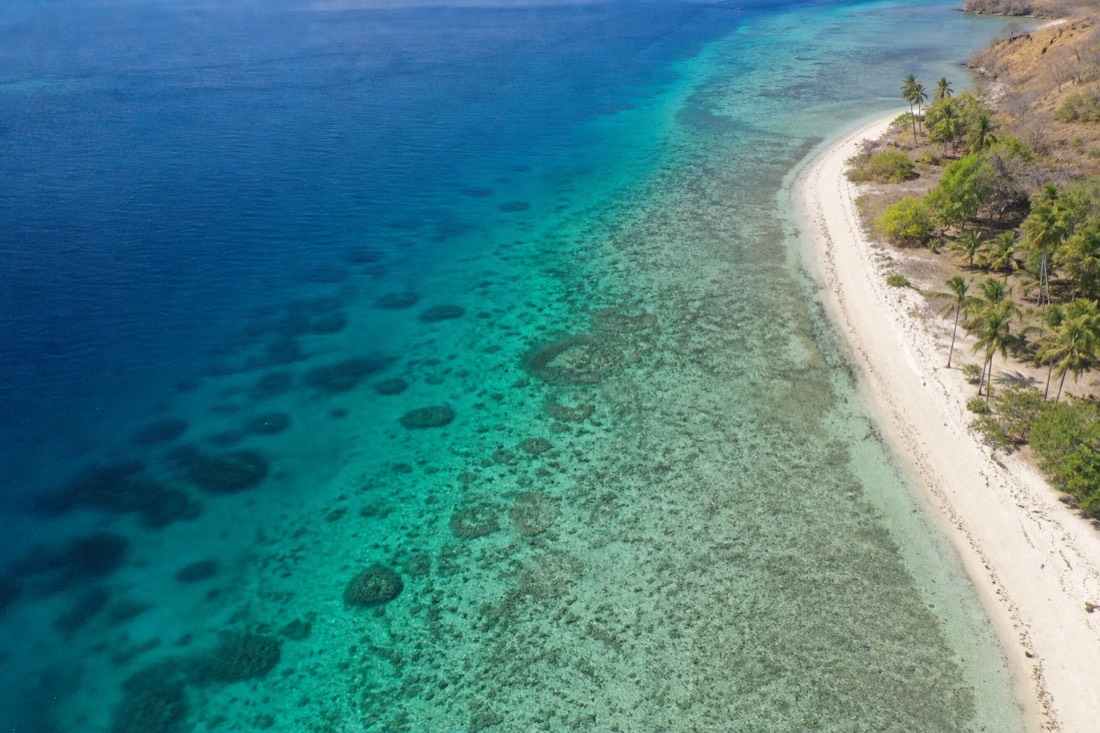
Ask most visitors what Komodo National Park protects and they'll say one thing: dragons. The park's actual conservation footprint is bigger, a working marine ecosystem and a dry-savanna terrestrial habitat that supports far more than the one famous reptile.
Booking Choice: Reach Padar, Pink Beach and a ranger-led dragon walk on an 11-hour group day trip. Explore Early-Departure Komodo Group Speedboat
Start: Labuan Bajo. Confirm age rules and extras before booking.
What does Komodo National Park actually protect, beyond the dragons?
The park's protected status, as a UNESCO World Heritage Site, covers both a terrestrial dry-savanna ecosystem across its islands and a marine ecosystem shaped by the meeting of warm northern and colder, nutrient-rich southern currents. That combination supports everything from the dragons themselves, covered in the where to see them guide and the dragon safety guide, down to the coral and manta rays most snorkelers actually spend their time with.
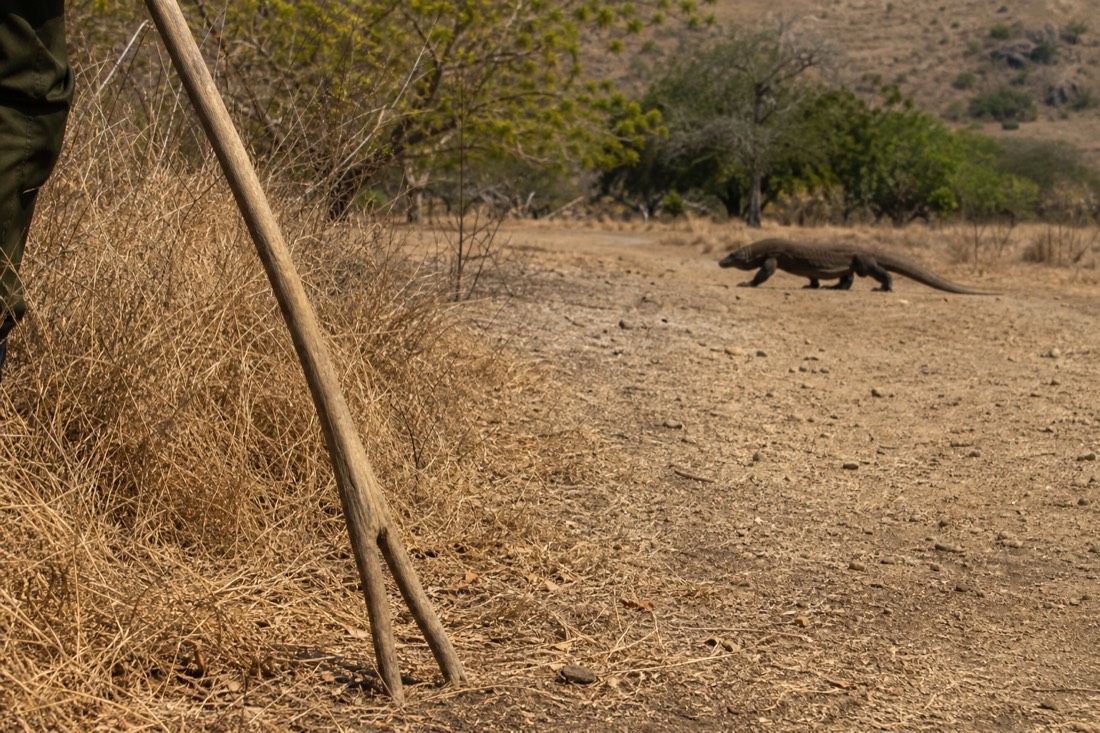
What marine life will you realistically see on a standard tour?
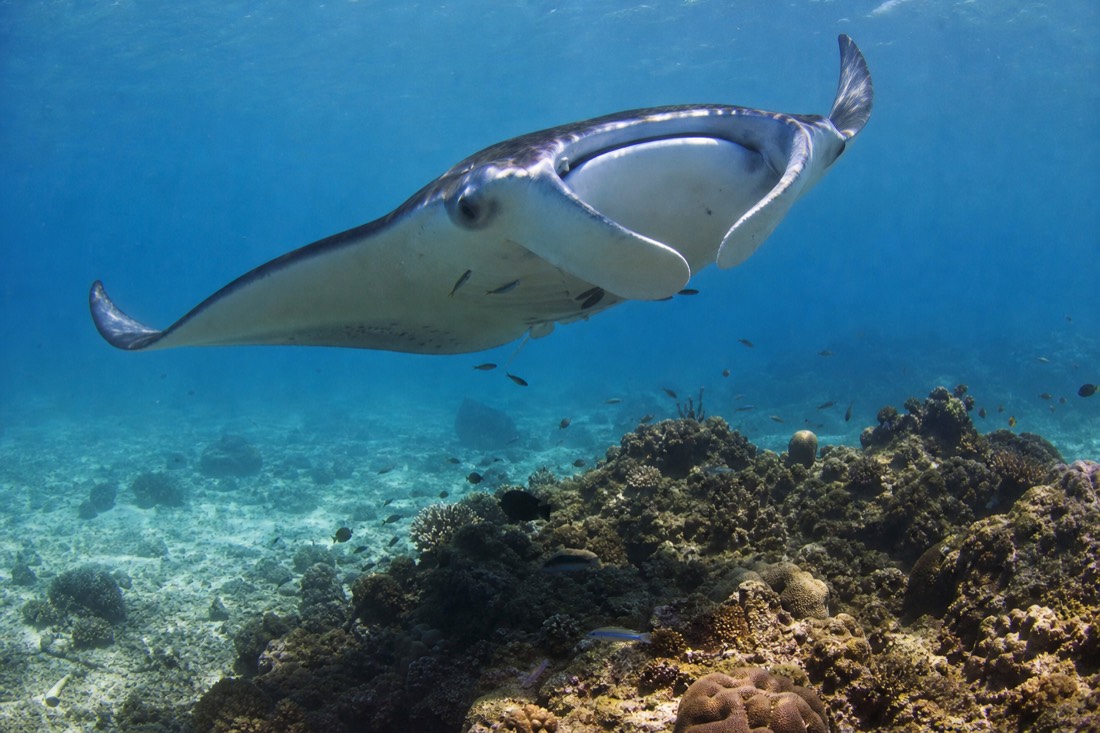
Manta rays at Manta Point, dense reef fish and coral throughout the snorkel stops, and sea turtles at spots like Siaba Island are the most consistent sightings on the tours listed on this site; reef sharks and the park's rarer macro life are more commonly encountered by scuba divers at specific named dive sites than by snorkelers on a standard itinerary. The best snorkeling spots guide covers exactly where to find each of these without diving gear.
| Species | Where you're likely to see it | Snorkel or dive? |
|---|---|---|
| Manta rays | Manta Point, southern sites in season | Both, snorkel-accessible |
| Sea turtles | Siaba Island and similar reef stops | Both |
| Reef fish, coral | Nearly every snorkel/dive stop | Both |
| Reef sharks | Current-swept named dive sites (e.g. Batu Bolong) | Primarily scuba |
| Macro life (nudibranchs, frogfish) | Southern sites near Rinca (e.g. Cannibal Rock) | Primarily scuba |
What land wildlife shares the park with the dragons?
Timor deer, wild pigs and a range of bird species live alongside the Komodo dragons across Komodo and Rinca Islands, and deer specifically form a key part of the dragons' natural prey base, so spotting them is part of understanding the same ecosystem rather than a separate sighting. The same habitat extends across several of the park's smaller named islands, even where dragons themselves aren't present.
| Species | Role in the ecosystem |
|---|---|
| Timor deer | Primary prey species for Komodo dragons |
| Wild pigs | Additional prey base, part of the dry-savanna habitat |
| Various bird species | Part of the broader island ecosystem |
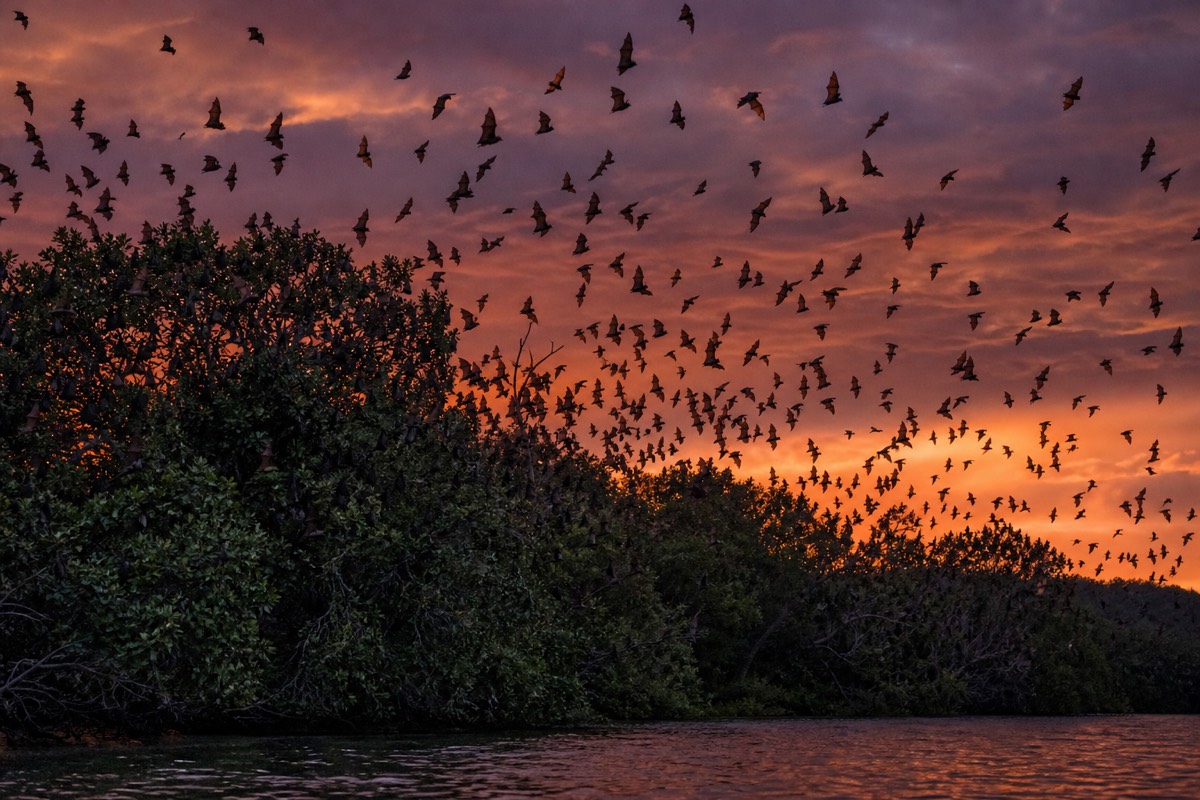
| Flying foxes (fruit bats) | Roost in large colonies, notably on Kalong Island |
What's the flying-fox spectacle at Kalong Island about?
Kalong’s flying foxes leave their mangrove roost around sunset. You can see this from a dedicated evening boat trip returning to Labuan Bajo, or from a multi-day itinerary that names Kalong. It is a wild event, so timing and sightings are not guaranteed.
How does the park's north-south current split affect what lives where?
The warmer water in the park's north supports more classic coral-reef life, dense hard coral, reef fish, occasional sharks, while the colder, nutrient-rich upwelling in the south supports a different mix, soft coral, macro subjects and a stronger manta presence during the upwelling season. It's the same underlying oceanography covered in the dive sites guide, but from the wildlife side rather than the site-selection side.
Is the park's wildlife under any real conservation pressure?
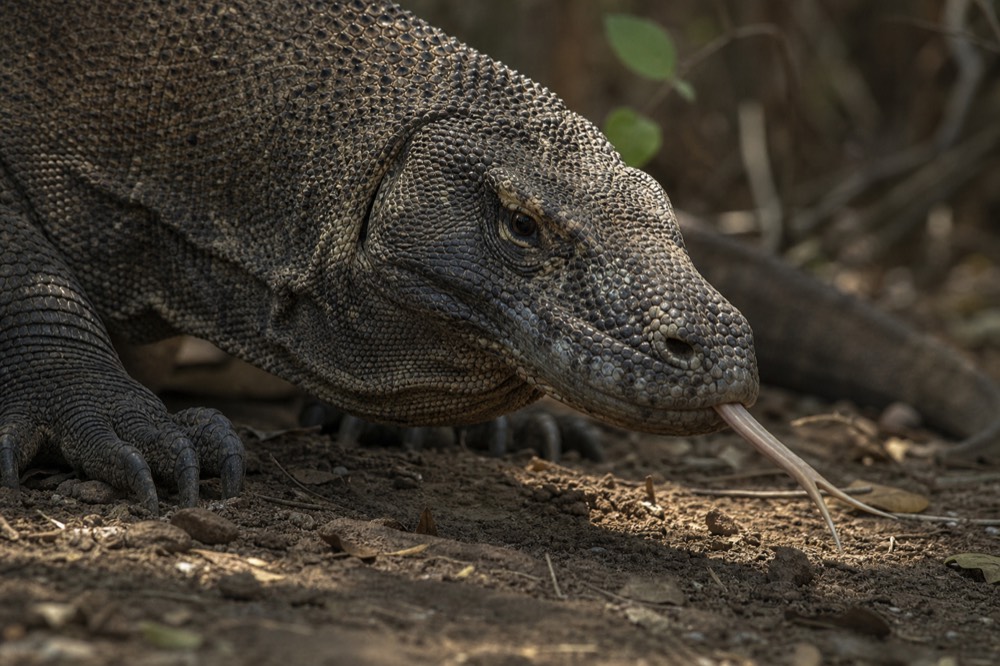
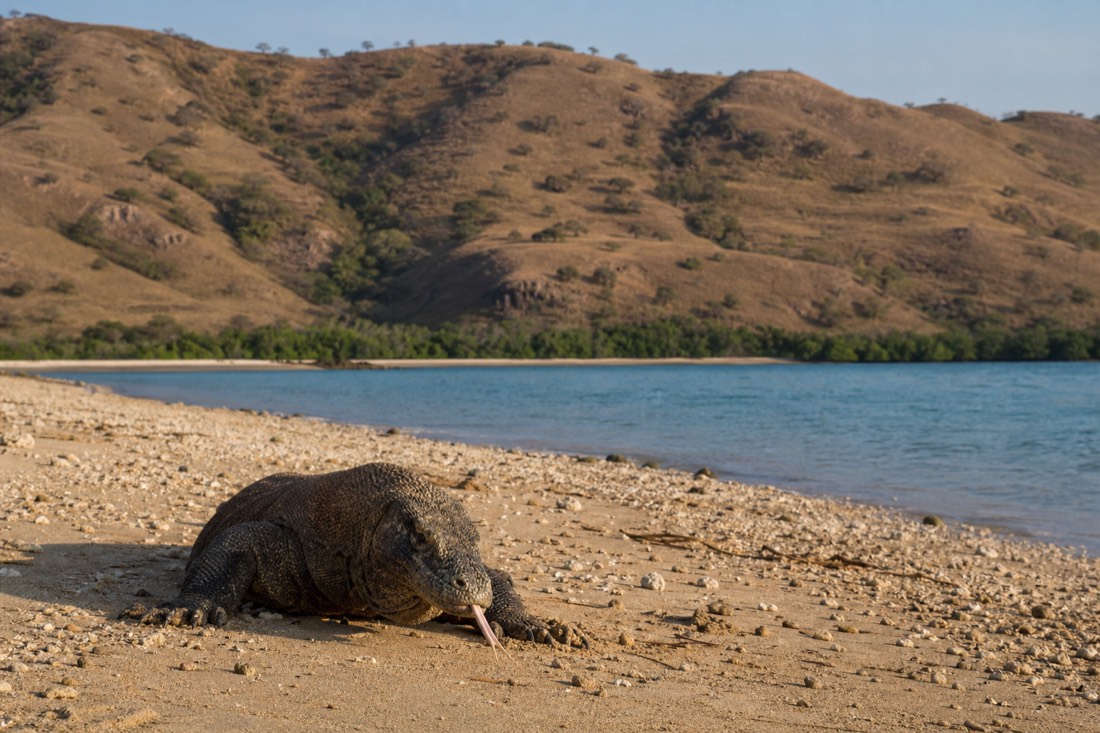
Yes: the Komodo dragon itself is listed as Endangered by the IUCN, with a total wild population estimated at roughly 3,400 individuals across the park's islands and a handful of protected pockets on Flores, and it faces documented, ongoing pressure from climate-driven habitat loss, prey decline and human encroachment. The dedicated Komodo dragon conservation blog post covers the species' current population estimate, IUCN status and the real threats it faces in full, sourced from IUCN and park-monitoring data rather than assumption, which is worth reading if the conservation angle is part of why you're visiting.
| Conservation fact | What's documented |
|---|---|
| IUCN status | Endangered (uplisted from Vulnerable in 2021) |
| Estimated wild population | Roughly 3,400 individuals, per recent park-monitoring census data |
| Population trend | Described as stable in recent park monitoring |
| Main documented threats | Climate-driven habitat/sea-level pressure, prey (deer) decline, human encroachment on Flores |
| Where most of the population lives | Roughly two-thirds on Komodo and Rinca Islands combined |
How does the park actually protect this ecosystem day to day?
Ranger patrols, camera-trap and demographic population surveys, and community-based conservation work through the Komodo Survival Program combine with the park's UNESCO World Heritage protections to manage both the dragon population and the wider habitat it depends on. None of this is visible to a typical day-trip visitor beyond the ranger who leads your walk, but it's the reason the population has been assessed as stable in recent monitoring despite the documented threats above.
| Conservation measure | What it does |
|---|---|
| Ranger patrols and monitoring | Anti-poaching, deer prey-base management, visitor safety |
| Komodo Survival Program | Community-based dragon monitoring and research |
| Camera-trap and demographic surveys | Long-term population tracking across the park's islands |
| UNESCO World Heritage status | International protected-area recognition and oversight |
What should a wildlife-focused visitor actually prioritize seeing?
If the ecosystem itself, not just the dragon photo, is the draw, prioritize a multi-day itinerary that pairs a Komodo Island or Rinca Island ranger walk with time at Manta Point and a stop at one of the park's smaller reef islands, since a single rushed day trip tends to compress the marine and terrestrial sides into narrow windows. Divers specifically curious about the macro and current-driven life in the park's south should read the dive sites guide, and anyone weighing this ecosystem against Indonesia's other headline destination should see Komodo vs Raja Ampat before deciding where to spend limited time.
What smaller wildlife do attentive visitors notice that the headline list misses?
Beyond the dragons, deer and mantas that dominate the marketing, the park's dry-savanna islands and fringing reefs support a quieter cast: monitor lizard relatives smaller than the dragons themselves, a range of seabirds working the shoreline and cliffs, and reef life at the smaller scale, anemonefish, sea stars, nudibranchs on the current-swept southern sites, that rewards actually slowing down at each stop rather than treating it as a photo checklist. Guides on both the dragon walks and the snorkel stops will point these out if asked, since most itineraries are paced to allow it, but they're easy to miss if you're moving quickly from one headline sighting to the next.
Birdwatchers in particular find more here than the marketing suggests: the park's mix of dry savanna, mangrove edges and open water supports species that don't get individual billing on any tour listing but are a genuine part of what a naturalist notices across a multi-day trip. None of this requires a special add-on tour, it's available on the same walks and snorkel stops every standard itinerary already includes, simply by paying attention beyond the headline animal at each stop.
How does Komodo's wildlife-protection model compare to other wildlife-tourism destinations?
The core structure, a protected national park, ranger-managed access, a fixed daily visitor framework, and community-based conservation research running alongside the tourism, mirrors the model used at many of the world's well-regarded wildlife destinations, from East African safari parks to marine protected areas elsewhere in Southeast Asia. What's distinctive about Komodo within that model is the combination of a single flagship land species with a genuinely rich marine system in the same protected boundary, which is less common than parks built around either land or water alone.
The practical upshot for a visitor is that the safety and conservation rules you'll encounter, ranger escorts, fixed trails, no touching or feeding wildlife, distance minimums, aren't unique overcaution specific to Komodo; they're the same category of rule used at comparable protected wildlife destinations worldwide, adapted to this park's specific animals and terrain.
What should a wildlife photographer specifically plan for across a multi-day trip?
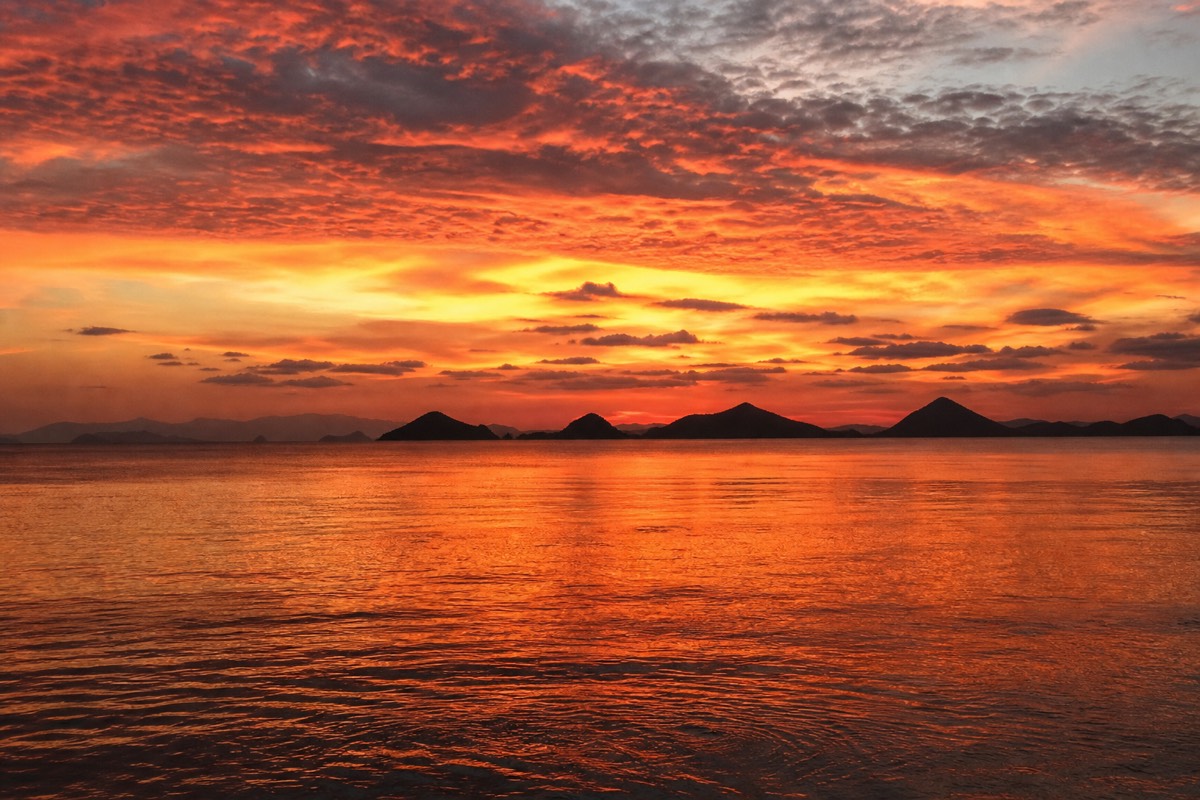
Golden-hour light at Padar's summit, the dragons in the cooler, more active morning hours, and Kalong Island's sunset flying-fox flight are the three distinct wildlife-and-landscape photo opportunities that genuinely benefit from a multi-day liveaboard rather than a single compressed day, since all three cluster around the edges of the day, sunrise and sunset, that a day trip's midday-heavy schedule doesn't always reach. A telephoto lens for the dragon walk, a wide lens for Padar's panorama, and a housing or dry bag setup for the manta snorkel cover the three very different shooting situations a full Komodo trip actually presents.
Why is the Komodo dragon considered such a significant evolutionary case study?
As the world's largest living lizard, confined for most of its evolutionary history to a small cluster of islands, the Komodo dragon is a frequently cited example of what biologists call island gigantism, where isolated island populations of a species evolve to unusually large size in the absence of larger competing predators. That isolation is also precisely why the species is so vulnerable today: a population concentrated on a handful of islands has nowhere to retreat to if conditions on those specific islands change, which is the underlying reason habitat and climate pressure weigh so heavily in its documented threat profile.
This evolutionary backstory isn't just academic trivia, it's part of what rangers and guides often work into a walk if visitors ask, and it reframes the encounter: you're not just seeing a big lizard, you're seeing a genuinely rare evolutionary outcome that exists in the wild in almost no other place on the planet.
Does visiting responsibly actually make a measurable difference for this ecosystem?
Park entrance and conservation fees, paid by every visitor, directly fund the ranger patrols, monitoring surveys and prey-management work that keep the population's trend stable despite documented outside pressures, which means a well-run guided visit is a genuine, if modest, contributor to the same conservation effort rather than something separate from it. Respecting the no-touching, no-feeding and stay-on-trail rules protects the same wildlife your fee helps fund the protection of, a rare case where responsible tourist behavior and conservation funding point in the same direction rather than working against each other.
Choosing an operator that follows the park's rules closely, rather than one that cuts corners on group size or ranger ratios to move more visitors through faster, is the one consumer-level choice that meaningfully supports this model, and it's part of why the tours featured on this site are built around standard park-compliant group sizes and ranger-led access rather than any shortcut version of the experience.
How does the wildlife you'll see change across a single day trip versus a multi-day liveaboard?
A single day trip delivers a genuinely representative sample, dragons, reef fish, mantas, in a compressed window, while a multi-day liveaboard spreads the same core sightings across more stops and adds species a single day rarely reaches, sea turtles at Siaba Island, Kalong Island's flying foxes, and often a second dragon-island population at Rinca. Neither trip length shortchanges the wildlife experience exactly, they simply offer different breadth, a fact worth weighing alongside the other format trade-offs in the day trip vs liveaboard guide.
| Trip length | Wildlife typically covered |
|---|---|
| Day trip | Dragons, reef fish and coral, mantas |
| 2-3 day liveaboard | All of the above, plus flying foxes at Kalong Island |
| 4+ day liveaboard | All of the above, plus Rinca's dragon population and southern macro life |
What's the single fact about this ecosystem worth remembering above all the species detail?
Komodo protects one of the very few places on Earth where a genuinely dangerous, ancient apex predator and a rich, current-driven marine system sit inside the same short boat ride, a combination that doesn't really exist anywhere else in a form this accessible to ordinary travelers. Everything else in this guide, the deer, the mantas, the reef sharks, the flying foxes, is real and worth knowing, but that core pairing, land predator and marine ecosystem, together, is what makes the park's wildlife genuinely unlike any other single destination's.
What should a wildlife-curious traveler actually read next?
The dive sites guide and snorkeling spots guide turn this ecosystem overview into an actual plan for the water, while the dragon safety guide and where to see them do the same for the park's signature land encounter. Together they cover the whole ecosystem this guide has only introduced.
| Your interest | Read next |
|---|---|
| Marine life, diving | Best dive sites guide |
| Marine life, snorkeling | Best snorkeling spots guide |
| Land wildlife, the dragons | Where to see them / safety guides |
What's the honest, one-sentence version of everything above?
Komodo is a working ecosystem, not a single-species attraction, and the tours on this site are built to show you a genuine cross-section of it, dragons, deer, mantas, reef, flying foxes, in whatever combination your chosen format and trip length allow.
One last thing worth knowing before you book based on this guide?
None of the wildlife covered here requires a specialist tour to see; it's all reachable through the standard boat tours listed on this site, which is exactly why this ecosystem is as approachable as it is remarkable. That accessibility, not just the species list, is the real reason Komodo's wildlife draws travelers who wouldn't normally call themselves wildlife enthusiasts.