Komodo Liveaboard Guide: 2D1N vs 3D2N vs 4D3N, Phinisi Boats, Luxury vs Budget (2026)
Sleeping on the water is what separates a good Komodo trip from a rushed one. Here's how to pick the right length and boat without overpaying for space you won't use.
Price note: fixed dollar amounts and totals in the editorial examples below are planning illustrations, not current quotes. Prices, child rates and private/shared options must be checked for your date and full party. The provider calendars and booking pages carry current offers.
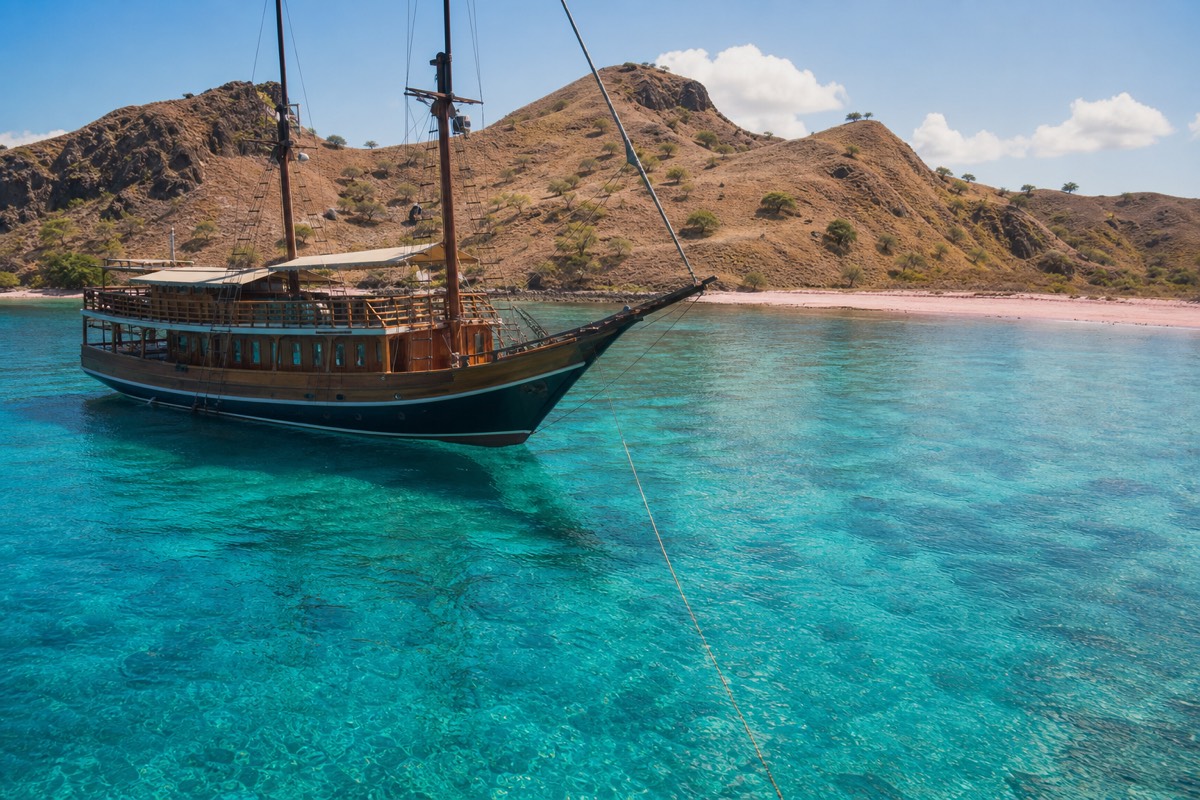
A liveaboard is the difference between seeing Komodo from a bus-tour schedule and actually living on the water for a couple of days. The boats look similar in photos. The trips they run are not.
Booking Choice: Spread Komodo, Padar, Kalong and snorkeling stops over three days and two boat nights. Explore Three-Day Komodo Phinisi Sailing
Start: Labuan Bajo. Confirm age rules and extras before booking.
2D1N vs 3D2N vs 4D3N, what you actually gain per extra night
Based on the stop lists of the liveaboard tours listed on this site; exact itineraries vary by operator and weather.
What is a Komodo liveaboard, exactly?
A liveaboard is a boat trip where you sleep aboard the vessel itself, usually a traditional wooden Phinisi, rather than returning to a hotel each night. In Komodo, that means one to three nights spent anchored in different bays around the park, with each day built around a mix of hiking, snorkeling and island stops rather than one long single-day circuit.
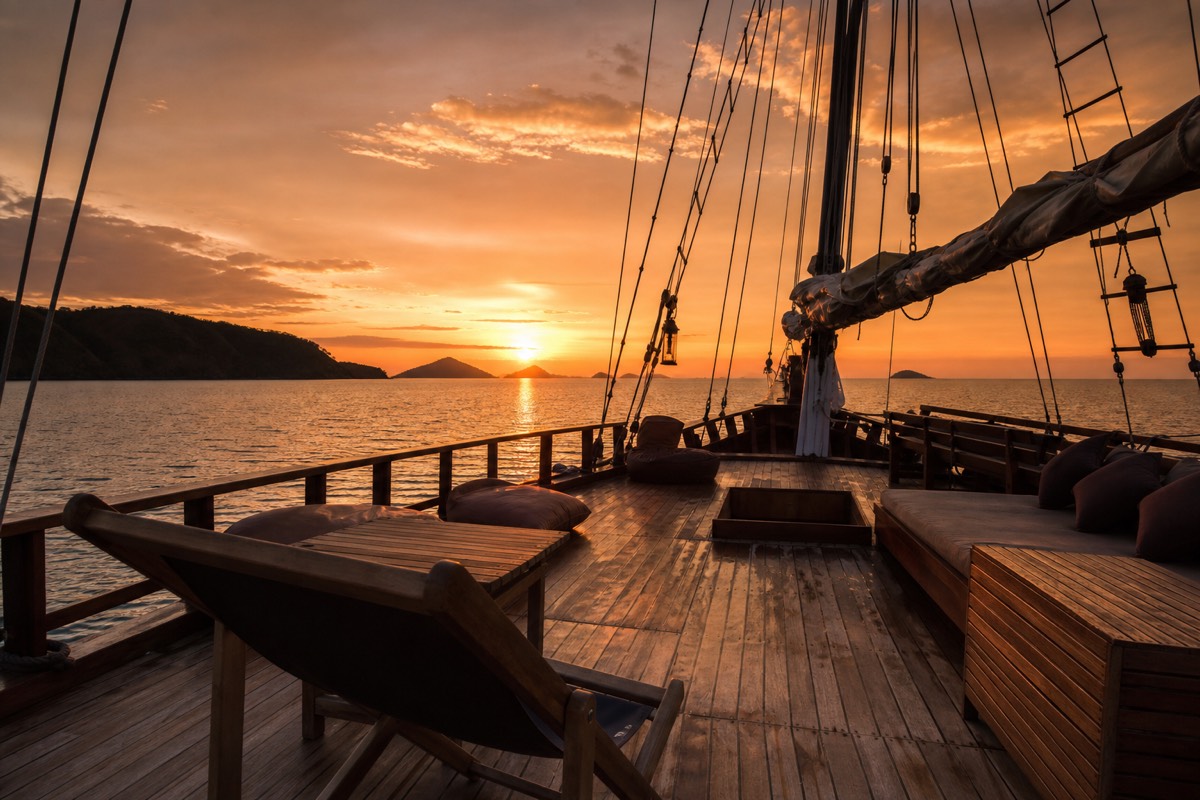
The format exists because the park's islands are spread out enough that reaching all of them in a single day means rushing. Sleeping on the boat removes the return trip to Labuan Bajo each evening, which is what unlocks stops like the Kalong Island sunset cruise that a day trip structurally can't include.
What is a Phinisi, and why is every liveaboard boat the same shape?
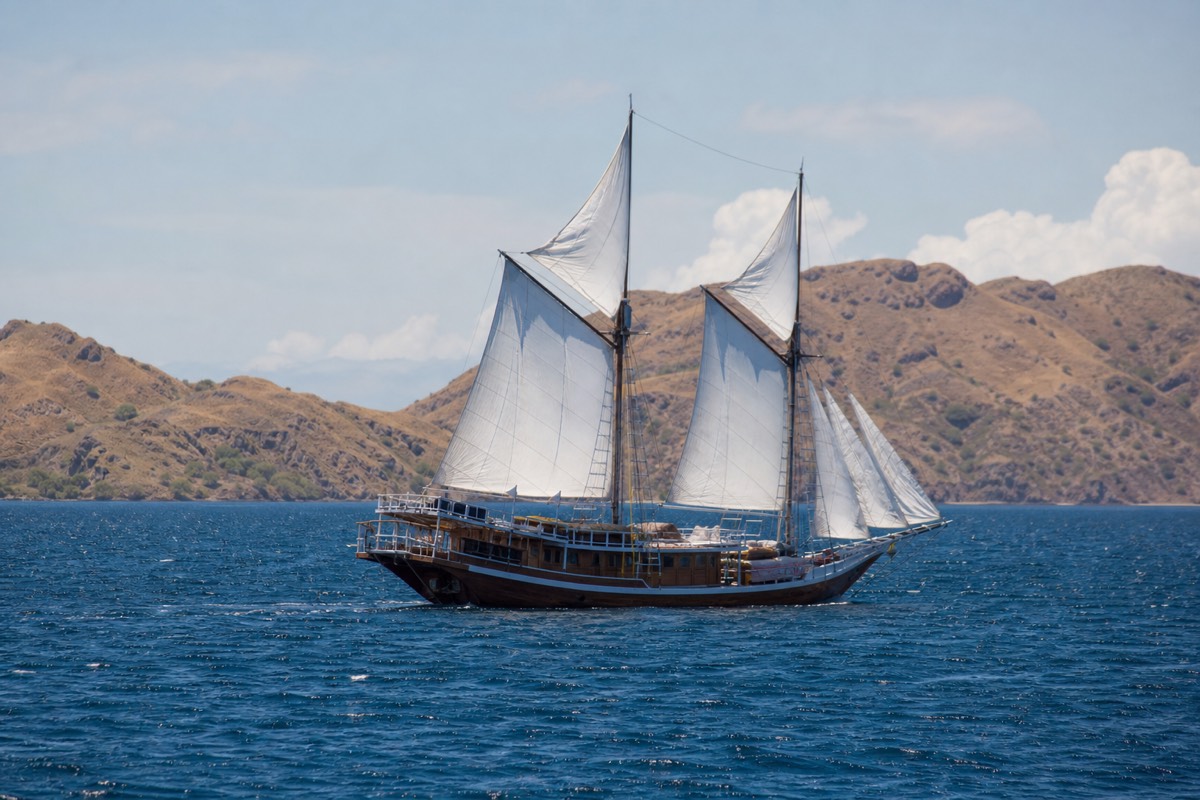
A Phinisi is a traditional two-masted wooden sailing boat with roots in Bugis and Makassar shipbuilding, and it's become the near-universal design for Indonesian liveaboards because the hull shape is stable, roomy, and easy to fit with cabins and a shaded upper deck. Most tourist Phinisis today are motor-assisted rather than purely under sail, but they keep the wooden hull, the raked masts, and the look that's become shorthand for "Indonesian liveaboard" across dive and travel media.
| Feature | What it typically means for you |
|---|---|
| Wooden hull, two masts | Smoother ride than a fiberglass speedboat in chop |
| Open upper deck | Where meals, sunbathing and the sunset stop happen |
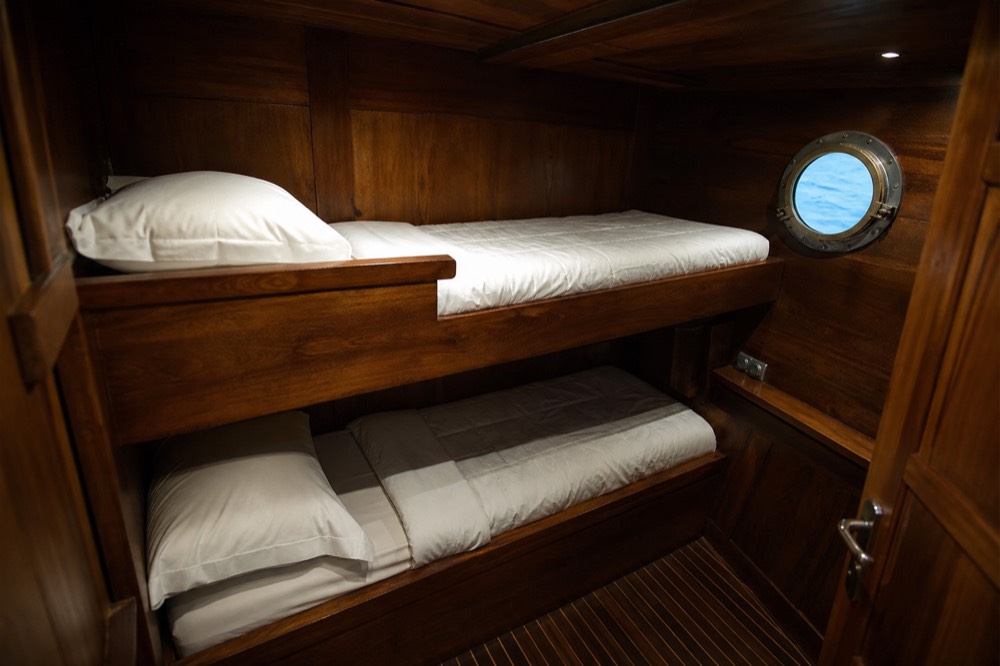
| Below-deck cabins | Shared or private depending on the tour tier |
| Generator power | Determines whether AC runs all night or only part-time |
2D1N vs 3D2N vs 4D3N: what does each extra night actually add?
Each additional night on a Komodo liveaboard buys you either more time at the stops you'd hit anyway, or access to islands a shorter trip has to skip entirely. A 2D1N trip covers the core circuit at a reasonable pace. 3D2N adds breathing room and usually a stop or two more, like Taka Makassar's sandbar. 4D3N is long enough to add an entirely different island, Rinca, plus an overland day to a waterfall and cave that sit outside the marine park altogether.
| Length | What's typically covered | Best for |
|---|---|---|
| 2D1N | Kelor, Kalong (sunset), Padar, Pink Beach, Komodo Island, Manta Point | Travelers with 2 days who still want the bat-flight sunset |
| 3D2N | Everything above plus more snorkel stops and a slower pace | Most travelers with 3+ days who want a proper trip without rushing |
| 4D3N | Everything above plus Rinca Island and an overland waterfall/cave day | Travelers who want Rinca's dragons and land-based sights too |
On this site, the 2D1N Pink Beach trip, the 3-day Phinisi sailing trip, the 3D2N Phinisi sailing tour with AC cabins, and the private 4D3N tour map onto exactly this ladder.
What's the real difference between budget and higher-tier liveaboards?
Budget open trips put you in a shared cabin, sometimes mixed-gender, with a communal bathroom, and may run AC only part of the night to conserve generator fuel; higher-tier boats offer private or twin AC cabins and more onboard comfort throughout. The marine itinerary, the islands you actually visit, tends to be similar across tiers on the same route. What changes is the boat.
| Factor | Budget open trip | Higher-tier / AC cabin trip |
|---|---|---|
| Cabin | Shared, sometimes mixed-gender | Private or twin |
| Air conditioning | Sometimes part-time or fan only | Usually full-time |
| Bathroom | Shared, described as "basic" | Often ensuite or fewer people per bathroom |
| Crew extras | Guide and standard crew | May include a dedicated onboard photographer |
| Typical price position | Lower per-person rate | Higher per-person rate for the same route length |
What should you check before booking a shared open-trip cabin?
If you're booking a shared cabin specifically, four questions are worth asking before you pay: is the cabin mixed-gender or can you request a same-gender assignment, is AC running full-time or only part of the night, how many people share each bathroom, and is there a minimum group size for the departure to run. None of these are usually deal-breakers, but knowing the answer in advance avoids a surprise on boarding day.

What does a typical liveaboard day actually look like?
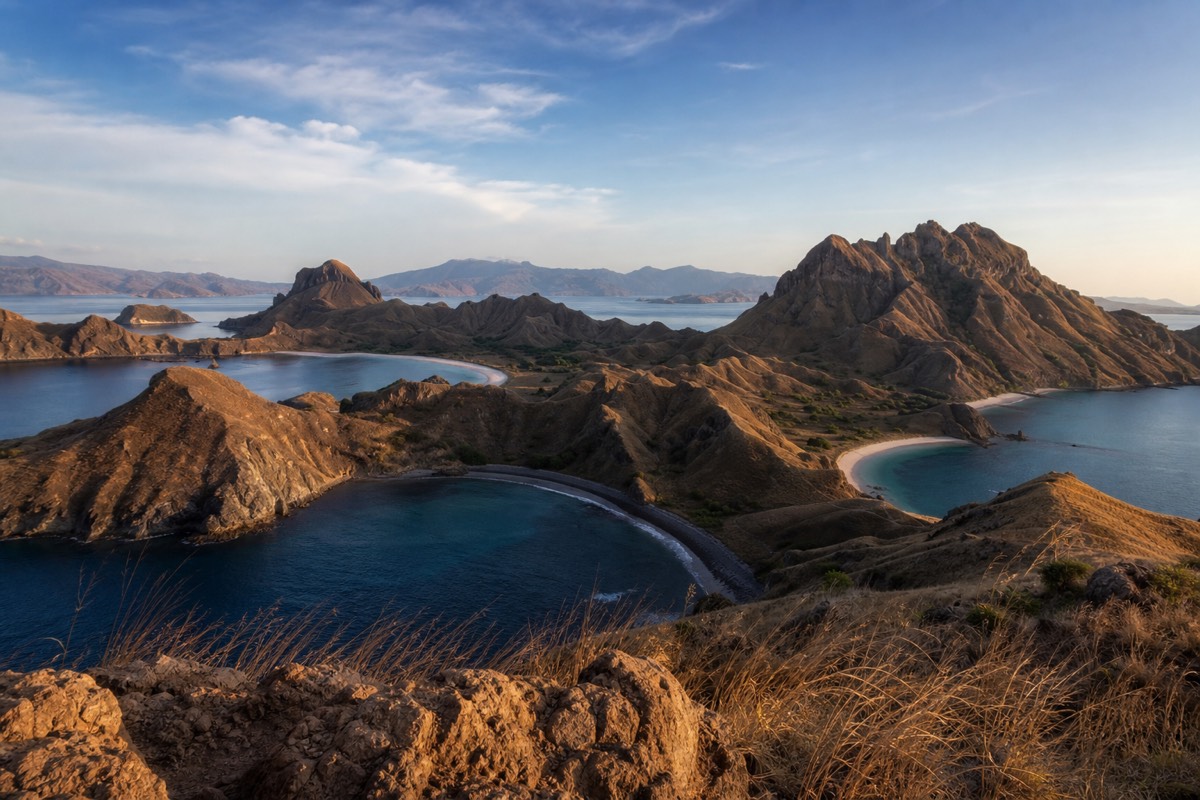
Days on a Komodo liveaboard tend to follow the same rhythm regardless of length: an early wake-up for a sunrise hike or the day's coolest snorkel window, a midday stop with lunch aboard, an afternoon activity, and a sunset spot before dinner and an early night. The early starts are deliberate. Padar's viewpoint and the wildlife on Komodo and Rinca are both more comfortable and more active in the cooler morning hours, before the midday heat sets in.
| Time | Typical activity |
|---|---|
| Early morning | Sunrise hike (Padar) or early snorkel before the heat |
| Mid-morning | Island stop: Komodo or Rinca ranger walk |
| Midday | Lunch aboard, transit to next stop |
| Afternoon | Snorkeling or beach time (Pink Beach, Kanawa) |
| Sunset | Kalong Island bat flight, or a scenic anchorage |
| Evening | Dinner aboard, early night ahead of the next early start |
How does a liveaboard compare to just doing repeated day trips?
Kalong is visited at sunset. Dedicated afternoon and private sunset trips return to Labuan Bajo the same evening, so an overnight stay is not required. Multi-day boats can include it too; check that Kalong is named on the chosen itinerary.
What does the price actually work out to per night, once you break down the math?
Dividing each liveaboard's starting price by its number of nights aboard shows the per-night rate dropping as the trip gets longer, since the boat, crew and provisioning costs are fixed regardless of how many nights you're aboard and simply get spread across more of them. That's worth knowing when a longer liveaboard's total price looks intimidating next to a shorter one at first glance.
| Tour | Nights aboard | From (per person) | Roughly per night |
|---|---|---|---|
| Pink Beach 2D1N | 1 | $184 | ~$184 |
| Older budget listing (no longer verified) | 2 | $259 | ~$130 |
| 3-day Phinisi sailing tour, AC cabin | 2 | $321 | ~$161 |
Treat these as a starting reference from this site's own listings rather than a fixed quote, since live prices move with season and demand; the separate park entrance fee applies on top regardless of which liveaboard you choose.
Who should genuinely skip a liveaboard and stick with a day trip instead?
Travelers who know they sleep poorly outside their own bed, anyone with a fixed same-day or next-day flight with little buffer, and anyone genuinely uncomfortable with shared, close-quarters living for multiple nights should lean toward a day trip or the shortest 2D1N option rather than a longer liveaboard. None of that means missing Komodo's core experience, since even a single day trip delivers the dragons, Padar's viewpoint, Pink Beach and manta snorkeling; it just means accepting that Kalong Island's sunset and the slower multi-day pace, covered in the day trip vs liveaboard guide, aren't part of that particular trip.
What does actually sleeping aboard a Phinisi feel like, night to night?
Nights aboard a moored Phinisi are generally calm, since the boat anchors in a sheltered bay overnight rather than continuing to sail, so the rocking most people associate with "sleeping on a boat" is much gentler than moving-water motion, closer to a light sway than anything that disrupts sleep for most travelers. Cabins run warm without AC running full-time, which is why checking a listing's AC specifics matters more for comfort than almost any other single detail on a multi-night booking.
| Factor | What to expect |
|---|---|
| Motion at anchor overnight | Gentle sway, not open-water motion |
| Cabin temperature without full AC | Warm; a light jacket for the deck, not the cabin |
| Noise | Generator hum on some boats; ask if this bothers you |
| Bathroom | Shared or ensuite depending on tier, see the budget-vs-tier table above |
How does booking directly with an operator's listing actually work for a liveaboard, step by step?
Booking follows the same GetYourGuide or Viator process as any tour on this site: select your dates on a listing such as the 3-day Komodo sailing tour, confirm cabin type if the tour offers a choice, and pay through the platform, which also secures your free-cancellation window per that listing's terms. Your pickup details, usually a specific harbor-area meeting point and time, arrive from the operator directly in the day or two before departure, which is the point to reconfirm your hotel's proximity to that pickup point if you haven't already.
What should you actually expect from crew and service level aboard a Phinisi?
A typical liveaboard crew includes a captain, deckhands, a cook and one or more guides, and service across even budget open trips tends to be attentive and genuinely warm, cooking, cleaning, gear handling and safety briefings are all part of the standard crew role rather than an upsell. Higher-tier boats add extras like a dedicated onboard photographer or a more elaborate meal service, but the baseline of attentive, hospitable crew service is consistent across price tiers, a detail repeat visitors specifically call out as exceeding expectations relative to the advertised price point.
How does choosing a liveaboard length actually interact with your Bali flight schedule?
A 3D2N or 4D3N liveaboard needs its start and end dates locked in before you book your Bali-Labuan Bajo flight, and building in a buffer day on each end, arriving a day before boarding, flying out a day after disembarking, protects the whole trip from a single delayed connection cascading into a missed boarding or a missed onward flight. This matters more for a liveaboard than a day trip specifically, since a missed liveaboard departure is a far bigger disruption than missing a single day-trip slot that can often be rebooked for the next day.
Working backward from a fixed return flight, rather than booking the liveaboard first and hoping the flights line up, tends to produce a cleaner, lower-stress itinerary overall.
What's the honest final word on choosing a liveaboard length and tier?
Match the length to how many days you genuinely have free, not to what sounds most impressive, and match the tier, budget shared cabin or AC private, to how much you personally value privacy over price, since the marine itinerary itself barely changes between tiers on the same route. Every length and tier covered in this guide delivers a real, memorable Komodo liveaboard experience; the differences are about comfort and pace, not about whether the trip is worth taking.
What should you actually do once you've picked a length and tier?
Check current price and cabin availability on the 3-day sailing tour or the 3-day Phinisi sailing trip, confirm your Bali-Labuan Bajo flight dates against the departure, and budget for the park entrance fee in cash per the entrance fees guide. Those three steps turn everything covered above into an actual, bookable trip.
What's the one question worth asking before you finalize a liveaboard booking?
Whether your specific cabin has AC running full-time, since that single detail affects nightly comfort more than almost any other factor covered in this guide, and it's a detail listings don't always spell out clearly at a glance.