Are Komodo Dragons Dangerous? Safety Facts for Visitors
Komodo dragons are genuinely venomous apex predators. Guided tourist walks are also, by the documented record, remarkably safe. Both things are true at once.
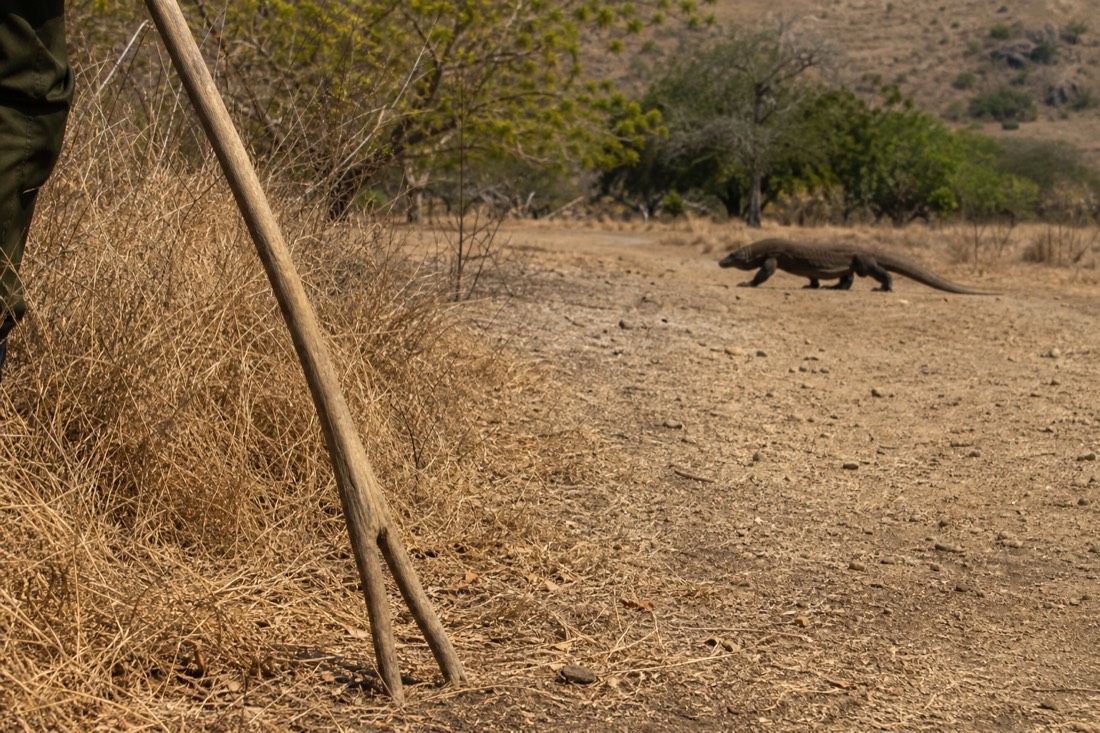
The Komodo dragon's reputation precedes it, and for good reason: it's the largest living lizard, a genuine apex predator with a documented venomous bite. What the reputation leaves out is how the tour system built around seeing them is actually designed to make an inherently wild encounter a safe one.
Booking Choice: Reach Padar, Pink Beach and a ranger-led dragon walk on an 11-hour group day trip. Explore Early-Departure Komodo Group Speedboat
Start: Labuan Bajo. Confirm age rules and extras before booking.
Are Komodo dragons actually dangerous?
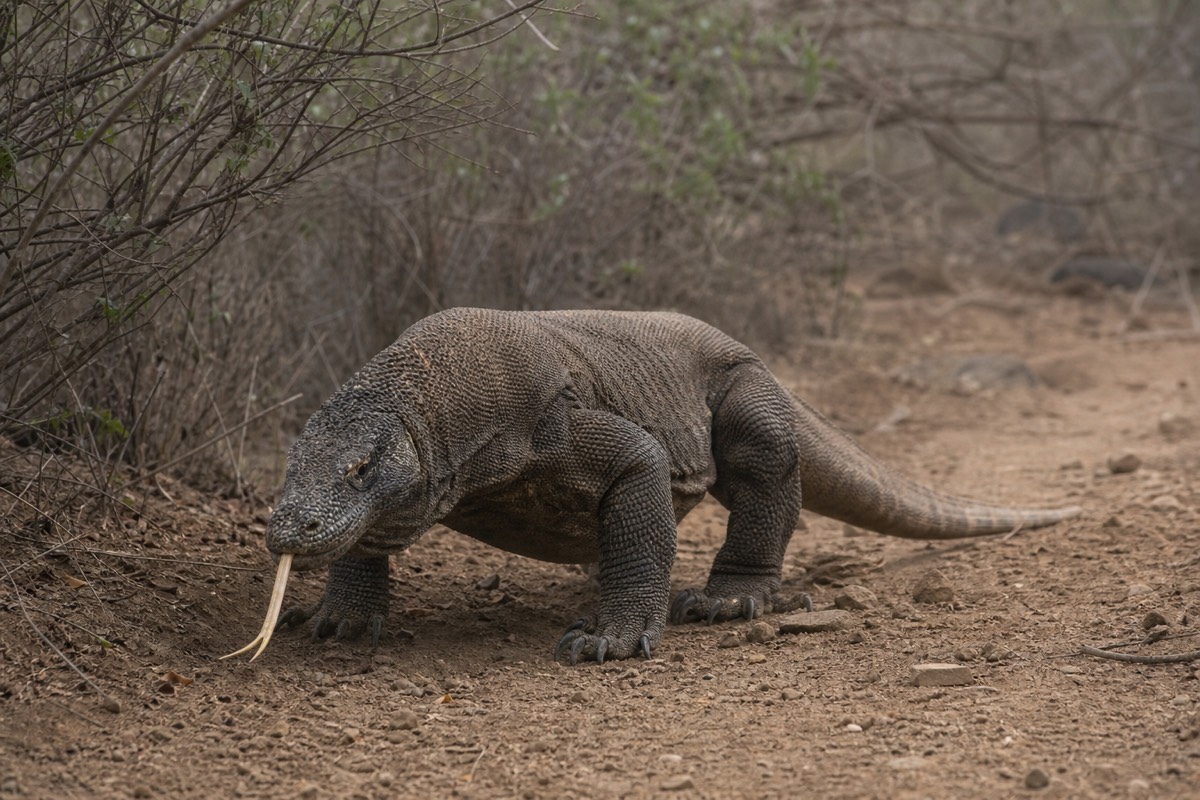
Yes, biologically: Komodo dragons are large, powerful predators with a serrated bite and confirmed venom that affects blood clotting and blood pressure in prey, and they are capable of seriously injuring or killing a person under the wrong circumstances. What tempers that fact for visitors is how guided tourism is structured around it: small groups, trained rangers, a fixed safe distance, and scheduling walks during the cooler hours when dragons are naturally less active.
How many people have Komodo dragons actually attacked or killed?
Park data documents 24 reported human attacks between 1974 and 2012, five of them fatal, with the majority involving local villagers rather than tourists on a guided walk. Relative to the volume of visitors the park has received over that period, confirmed attacks are rare, and there is no documented fatality on record during a properly guided, ranger-led tourist walk specifically.
| Fact | What's documented |
|---|---|
| Reported attacks, 1974-2012 | 24, per park data |
| Fatalities in that period | 5 |
| Who was most often involved | Local villagers, not guided tourists |
| Guided-tour fatalities on record | None documented |
| Most recent widely reported incident | 2009, involving a fisherman who entered a restricted area, not a tourist walk |
What do rangers actually do to keep a guided walk safe?
Rangers accompany every visitor group on a fixed, designated path, never allow independent exploration, carry a long forked wooden stick to redirect a curious dragon's head without harming it, and enforce a minimum safe distance, typically several meters, between the group and any dragon encountered. Groups stay small and the pace is set by the ranger, not the visitors, which is the core of how the system manages a genuinely wild, unpredictable animal.
| Safety measure | Purpose |
|---|---|
| Fixed, designated walking path | Avoids surprise encounters off-trail |
| Ranger-led, small groups only | No independent exploration allowed |
| Forked wooden safety stick | Redirects a curious dragon without harming it |
| Minimum distance rule | Keeps visitors outside a dragon's realistic strike range |
| No feeding or touching, ever | Prevents habituation and defensive reactions |
| Morning-hour scheduling | Dragons are naturally less active in midday heat |
Is it true dragons are drugged or sedated to make tourist visits safer?
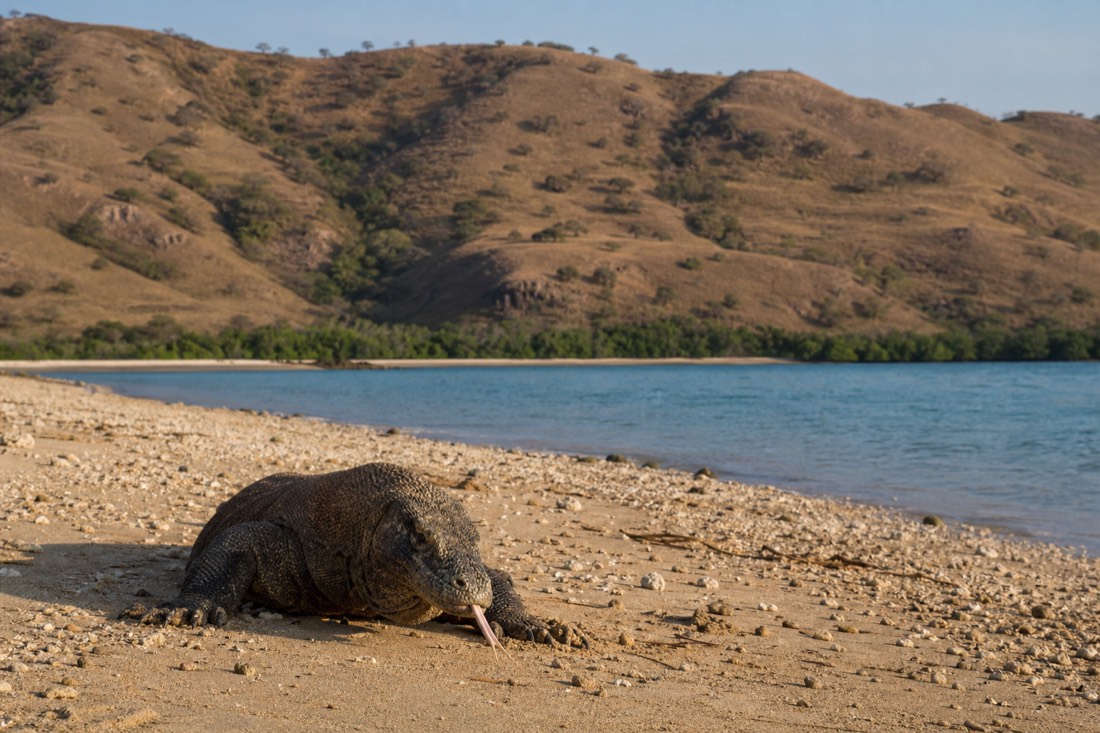
No. There is no credible evidence, from park authorities, journalists or researchers, that dragons are drugged or sedated for tourism, and the claim is best understood as a myth rather than a documented practice. The behavior that likely fuels the rumor, dragons appearing calm, lethargic or unbothered by nearby humans, has an ordinary explanation: dragons are cold-blooded reptiles that rest visibly after feeding, and animals in frequently visited tourist areas can become somewhat habituated to human presence over time, appearing calmer without being sedated in any way.
Historically, some sites practiced supplemental feeding, including lowering carcasses to draw dragons out for viewing, a documented tourism-management approach studied for its conservation drawbacks. That practice has been discontinued and is prohibited under current park rules; feeding wild dragons is not part of how guided visits work today.
What should you personally do to stay safe on a guided dragon walk?
The advice from operators is consistent and simple: stay with your ranger and group at all times, never approach a dragon for a closer photo, keep children close, and follow instructions immediately if a ranger redirects your route. Loose, flowing clothing and strong food smells are also worth avoiding, since dragons rely heavily on scent, and wearing red is sometimes flagged by guides, though the safety case for this rests more on caution than confirmed research.
| Do | Don't |
|---|---|
| Stay with your ranger group at all times | Wander off the marked path |
| Keep a respectful distance for photos | Approach for a closer shot |
| Follow ranger redirection immediately | Ignore instructions to move or stop |
| Keep children within arm's reach | Let kids run ahead on the trail |
| Wear closed shoes on the walk | Wear sandals or go barefoot |
Should the danger factor stop you from doing the tour?
For the vast majority of visitors, no. The combination of small guided groups, trained rangers, a fixed safe distance and no history of guided-tour fatalities means the practical risk on a standard visit is low, even though the animal itself is genuinely capable of serious harm outside that controlled setting. The is a Komodo tour worth it guide weighs this alongside the trip's other costs and tradeoffs if you're still deciding whether to book, and the species' conservation status, population and real threats are worth reading if the wildlife angle is your main reason for visiting.

Does the species' rarity change how rangers manage an encounter?
Yes, indirectly: the Komodo dragon is listed as Endangered by the IUCN, with a total wild population estimated at roughly 3,400 individuals concentrated on just a handful of islands, and that rarity is part of why park protocol emphasizes redirecting a dragon away from the group rather than any measure that could injure the animal. The forked stick, the minimum distance rule and the ban on feeding all serve two goals at once: visitor safety and protecting an animal found in the wild almost nowhere else on Earth.
| Fact | What's documented |
|---|---|
| IUCN status | Endangered |
| Estimated wild population | Roughly 3,400 individuals |
| Where most of the population lives | Roughly two-thirds on Komodo and Rinca Islands |
| Ranger tools designed to avoid harming the animal | Forked stick, distance rule, no feeding or touching |
How does this compare to other guided wildlife encounters travelers might have done?
The core safety model, small groups, a trained guide, a fixed distance rule, a no-touching policy, is the same structure used for guided encounters with other large wild animals worldwide, from grizzly bear viewing to safari game drives, and Komodo's guided-tour record fits that same general pattern of "genuinely wild animal, well-managed low-risk encounter." What's specific to Komodo is the venom and the animal's ambush-predator hunting style, which is why the distance rule here is treated as non-negotiable rather than a loose guideline.
Who should think twice before booking a dragon walk specifically?
Anyone with a genuine phobia of reptiles that would make following ranger instructions calmly difficult, or anyone hoping for a closer, more hands-on wildlife interaction than a managed-distance walk allows, should know in advance what this experience actually is: a supervised, respectful-distance sighting, not a petting encounter or a guaranteed close-up photo op. It isn't a reason to skip Komodo entirely, since the rest of a typical itinerary, Padar, Pink Beach, manta snorkeling, stands on its own, but it's worth setting expectations before you book if the dragon walk was your single main reason for the trip.
What actually happens physiologically from a bite, and how was the venom confirmed?
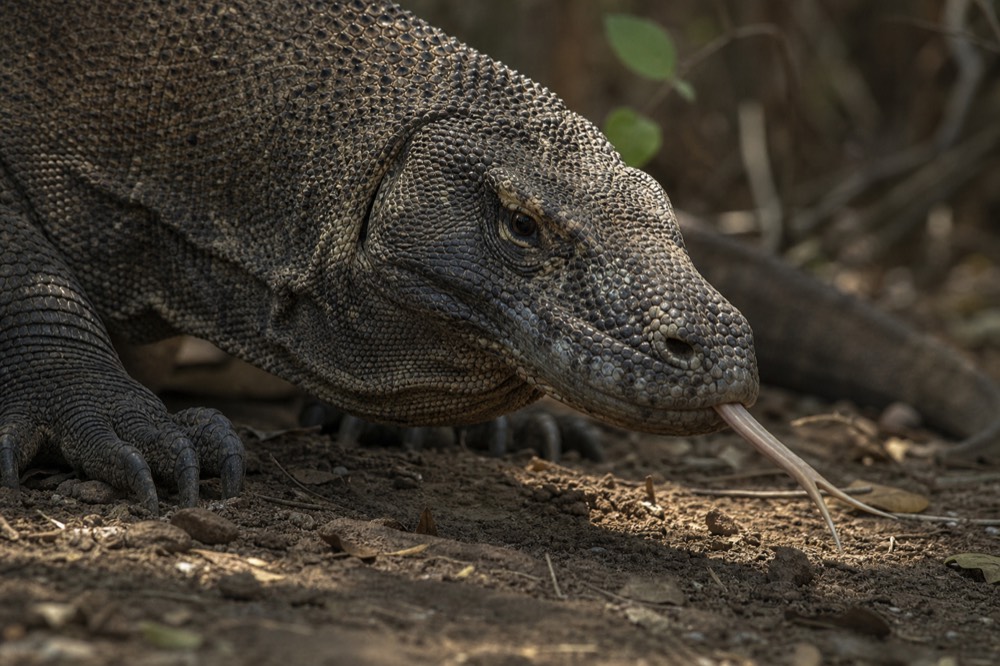
Research has confirmed that Komodo dragons produce venom in glands in the lower jaw that affects a prey animal's blood clotting and blood pressure, working alongside a bite from serrated teeth to weaken large prey over time rather than kill instantly, which overturned an older assumption that dragon bites were dangerous purely because of bacteria in their saliva. That distinction matters for how the species is understood scientifically, even though the practical safety advice for visitors, stay at a distance, don't approach, follow your ranger, doesn't change either way.
For a wild predator, this venom-plus-bite combination is a genuinely effective way to bring down animals many times a dragon's own body weight, like the Timor deer that form its main prey base, over a slower pursuit than a single decisive strike. It's also part of why the "confirmed human fatalities" number stays as low as it is relative to the animal's capability: a bite that isn't immediately fatal gives most incidents involving humans a chance to end in injury rather than death, provided medical care follows.
Why do most historical attacks involve local villagers rather than tourists specifically?
Villagers living near or entering the park's boundaries encounter dragons under uncontrolled circumstances, working in fields, gathering resources, or moving through unmarked areas, without a ranger, a fixed trail, or a safety briefing, which is a fundamentally different exposure than a guided tourist walk with all three of those safeguards in place. The documented pattern in park attack records reflects that difference in exposure, not a difference in how dangerous the animal is depending on who's nearby.
This is also the clearest, most concrete argument for why the guided-tour system works: it doesn't change the dragon, it changes the human side of the equation, structured distance, trained observation, a fixed and predictable path, precisely the conditions that are largely absent from the circumstances behind most historical village-area incidents.
What should you actually do if a dragon approaches closer than expected during a walk?
Stay still, stay quiet, and follow your ranger's direction immediately rather than making a sudden movement or trying to retreat on your own, since a calm, ranger-managed response is exactly what the guided system is designed to handle and rangers train specifically for this scenario. A dragon that approaches a group is far more often investigating an unfamiliar scent or presence than actively hunting, and the ranger's forked stick and positioning are there precisely to redirect that curiosity calmly rather than escalate it.
| If this happens | What to do |
|---|---|
| A dragon moves toward the group | Stay still, let the ranger manage distance |
| You feel too close for comfort | Quietly signal your ranger, don't move independently |
| A dragon crosses the trail ahead | Wait for ranger instruction before proceeding |
Has the guided-tour safety record actually improved as tourism to the park has grown?
As Komodo's international profile and visitor numbers have risen over recent decades, the guided-access model, ranger escorts, fixed trails, formal group limits, has become more standardized and consistently enforced across operators, part of the same broader shift toward permit-based, structured park access covered in the entrance fees guide. That formalization is a genuine safety improvement over any more informal, ad hoc arrangement a smaller-scale tourism operation might have run decades ago, and it's part of why the guided-tour fatality record has stayed clean even as visitor numbers have grown substantially.
How does this safety model compare across Komodo's different guided wildlife stops?
The same core safety principles, trained guide, fixed distance, no touching or feeding, small group size, apply consistently whether you're on the dragon walk, snorkeling near reef sharks at a dive site, or watching Kalong Island's bat colony at sunset, which is a deliberate, park-wide approach rather than a rule invented specifically for dragons. Recognizing that pattern helps set expectations across your whole trip: nearly every wildlife encounter in the park follows the same managed-distance, guide-led structure, not just the headline dragon walk.
| Encounter | Core safety structure |
|---|---|
| Komodo/Rinca dragon walk | Ranger, fixed trail, distance rule, no touching |
| Manta Point snorkel | Guide-led, no touching, respectful distance |
| Kalong Island sunset viewing | Boat-based, observational, no direct contact |
What's the honest, single-sentence summary for someone deciding whether to do the dragon walk?
A well-run guided walk with a licensed ranger is a genuinely low-risk way to see one of the world's most remarkable wild predators up close, and the documented safety record across guided tourist visits backs that up directly, so the honest answer for nearly every physically able traveler is yes, it's worth doing, provided you follow the ranger's lead the entire time.
What should you actually read next if the safety picture has put your mind at ease?
Move on to the practical logistics: where to actually see the dragons covers which island your tour will likely visit and what the walk itself involves, while the species' conservation status and real threats rounds out the picture for anyone whose interest goes beyond the safety question alone.
Is there anything else worth asking your specific operator about safety before you book?
It's reasonable to ask how many years the company has run guided walks and whether their rangers are park-certified, since this confirms you're booking with an operator that follows the park's official safety structure rather than an informal arrangement, though in practice nearly every established operator selling Komodo tours meets this standard.
Final word: should the word "dangerous" in this guide's title put you off booking?
No. It's there because the honest answer requires acknowledging the animal's real capability, not because the guided experience itself carries meaningful risk for a prepared, rule-following visitor.