Komodo Dragons: Where to See Them and What to Know Before You Go
Two islands in this park have wild, free-roaming dragon populations you can actually walk among. They're not interchangeable, and most tours only visit one.
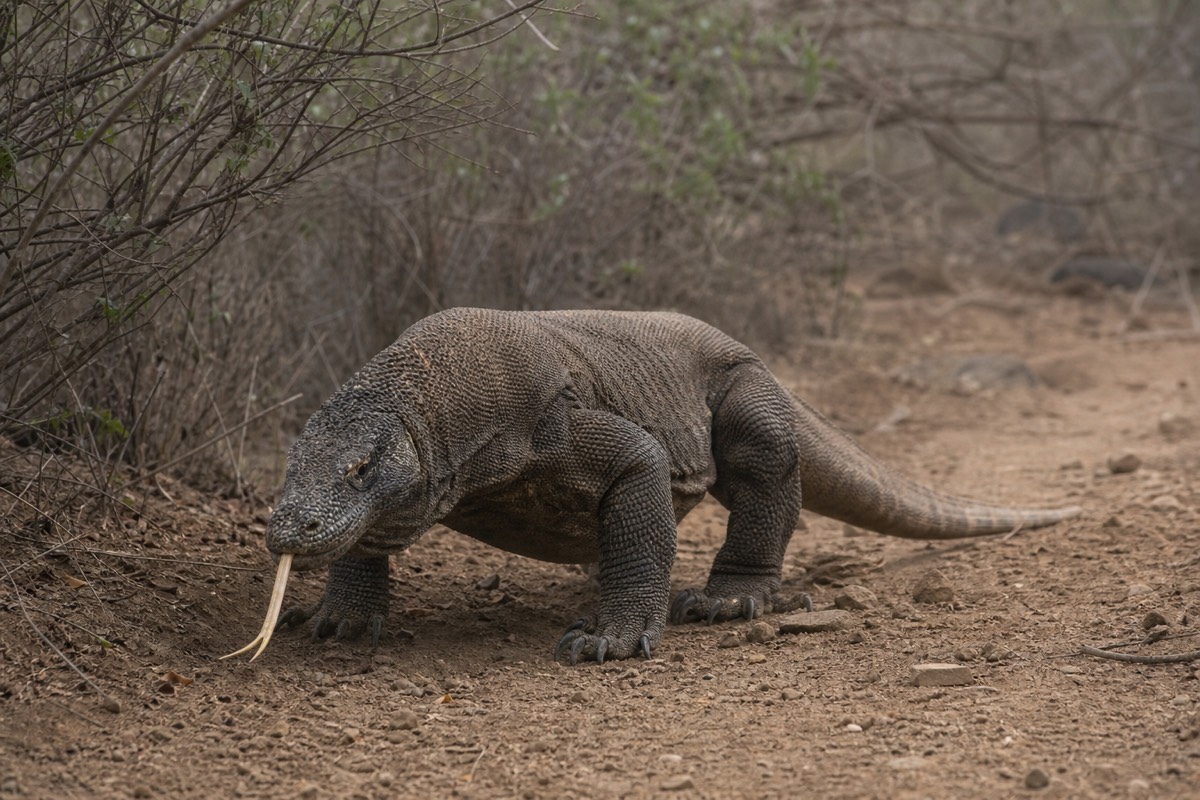
Two islands inside this park hold wild, walkable Komodo dragon populations: Komodo Island itself, and Rinca Island. They get lumped together constantly, but the terrain, the walk, and even the typical sighting experience differ enough to be worth knowing before you pick a tour.
Booking Choice: Reach Padar, Pink Beach and a ranger-led dragon walk on an 11-hour group day trip. Explore Early-Departure Komodo Group Speedboat
Start: Labuan Bajo. Confirm age rules and extras before booking.
Where can you actually see wild Komodo dragons?
The two islands with substantial wild, walkable dragon populations are Komodo Island and Rinca Island, both inside the national park and both reachable only by boat from Labuan Bajo. Smaller, more isolated populations exist on Gili Motang and in a couple of protected pockets on the Flores mainland, but these aren't part of the standard tourist circuit, and nearly every tour operator's "see the dragons" stop means one of the two main islands.
What's the actual difference between Komodo Island and Rinca Island?
Komodo Island is the larger, more mountainous of the two and the one most standard day trips and open trips visit; Rinca Island is smaller, drier and flatter, with more open savanna terrain that often makes dragons easier to spot at a distance. Rinca tends to appear on longer, multi-day itineraries rather than single-day trips, partly because of where it sits relative to the rest of a typical route.
| Factor | Komodo Island | Rinca Island |
|---|---|---|
| Terrain | Larger, more varied, some hills | Smaller, flatter, open dry savanna |
| Typical inclusion | Most day trips and open trips | Longer, multi-day itineraries |
| Sighting conditions | Good, varies by trail and season | Open terrain often makes spotting easier |
| Ranger station | Loh Liang | Loh Buaya |
For a fuller side-by-side, including which tour formats visit which island, see the dedicated Komodo vs Rinca comparison guide.
What does a guided dragon walk actually involve?
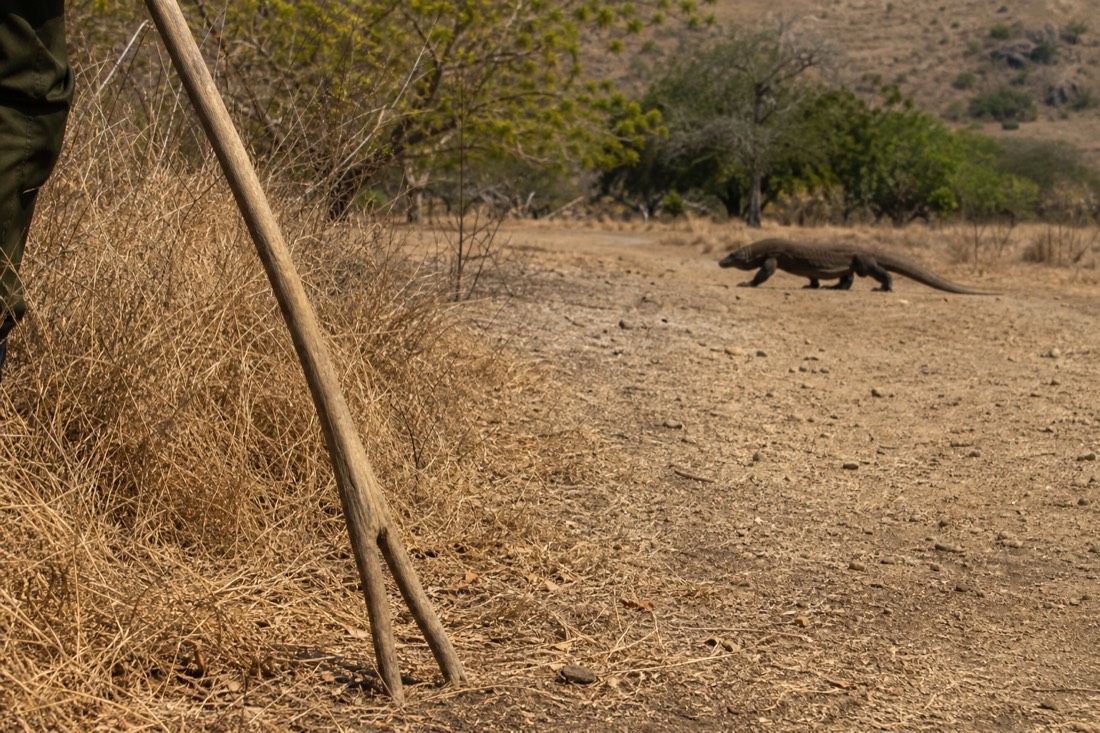
You'll be grouped with other visitors, assigned a ranger carrying a forked wooden safety stick, and led along a fixed trail through dry savanna and forest edge habitat, stopping wherever dragons are spotted at a safe, ranger-managed distance. Walks typically last 30-90 minutes depending on the itinerary and how much activity the rangers observe that day.
| Stage | What happens |
|---|---|
| Arrival at the ranger post | Group assignment, brief safety orientation |
| Guided walk | Fixed trail, ranger leads and sets the pace |
| Dragon encounters | Ranger manages distance and viewing time |
| Return | Same fixed trail back to the ranger post |
For the full safety picture, including what rangers do and the real, sourced attack history, see the Komodo dragon safety guide.
What are you actually likely to see, beyond the dragons themselves?
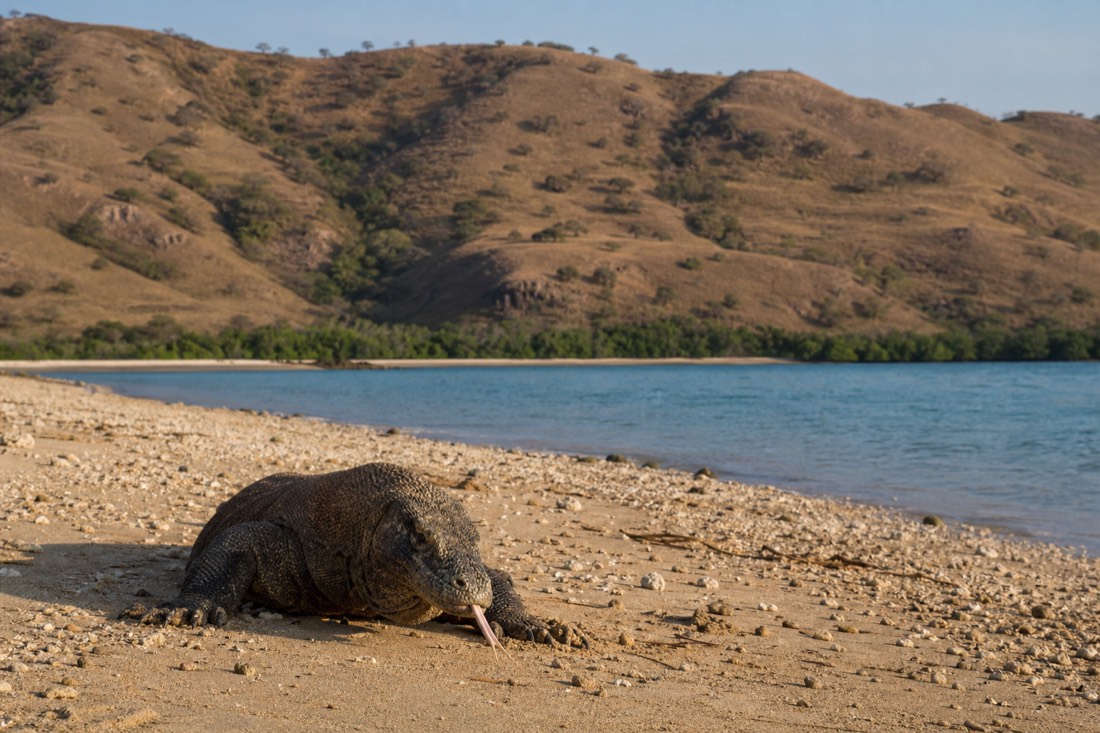
Both islands support Timor deer, wild pigs and various birds as part of the same dry-savanna ecosystem the dragons depend on for prey, so a walk often turns up more wildlife than dragons alone. The landscape itself, dry grassland dotted with lontar palms giving way to forested ridges, is part of what makes the walk worth doing even beyond the headline animal, and the wider marine life and wildlife guide covers what shares the water alongside it. The full picture of the species' population, conservation status and the threats it faces is covered separately, if you want the deeper context behind what you're seeing.
When are dragons most active, and does that affect your chances?
Dragons are more active during the cooler morning hours and noticeably more lethargic in the heat of midday, which is why nearly every operator schedules the walk earlier in the day rather than later. This isn't a guarantee of a sighting, since these are wild animals following their own patterns, but it's the single factor within a tour's control that improves the odds. Season plays a role too; see the best time to visit guide for how month-to-month conditions affect the wider trip, not just this one walk.
| Time of day | Typical dragon activity |
|---|---|
| Early morning | More active, better sighting odds |
| Late morning | Activity beginning to taper |
| Midday | Lethargic, seeking shade |
| Late afternoon | Activity picking back up |
What should you wear and bring for the walk itself?
Closed shoes are the clear standard, given the dirt trail and dry brush. Light, breathable clothing works better than anything heavy, since the walk happens in full tropical heat with limited shade. Strong perfumes and food smells are worth avoiding, since dragons rely heavily on scent. A telephoto lens or zoom, if you have one, gets a better photo than trying to get physically closer, which rangers won't allow regardless.
How does a Komodo Island morning actually unfold, hour by hour?
A standard dragon-walk morning starts with the boat mooring near Loh Liang ranger post, a brief safety briefing on the dock, then a 30-90 minute guided walk before returning to the same post to reboard. The exact rhythm depends on how much activity rangers spot that day, but the structure itself is consistent across nearly every operator using this ranger station.
| Stage | Approximate time |
|---|---|
| Boat mooring, disembark at Loh Liang | 5-10 minutes |
| Ranger assignment and safety briefing | 5-10 minutes |
| Guided walk | 30-90 minutes |
| Return to boat | 5-10 minutes |
Does the ranger post itself get crowded, and does that affect the walk?
Loh Liang, Komodo Island's ranger post, sees more overall traffic than Rinca's Loh Buaya simply because more standard itineraries route through it, which can mean multiple groups queuing for the trailhead around the same mid-morning window on a busy day. Groups are still kept small and separate once on the trail itself, so crowding at the post rarely translates into a crowded walk, but an early-bird departure avoids the queue at the post entirely, not just the trail.
| Timing | Ranger post traffic |
|---|---|
| Early-bird arrival | Light; often first group of the day |
| Standard mid-morning day trip | Busiest; multiple boats can overlap |
| Multi-day liveaboard, flexible timing | Variable, often lighter than the standard fleet |
Who should choose a Rinca Island walk over a Komodo Island one, if given the choice?
Travelers on a longer itinerary who specifically want the easiest possible spotting conditions should lean toward Rinca, since its flatter, more open savanna makes dragons visible at a greater distance than Komodo Island's more varied terrain. Travelers on a single-day or short trip, where the routing naturally pairs the dragon walk with Padar and Pink Beach, don't have much practical choice in the matter, and Komodo Island's walk delivers the same core experience regardless. The Komodo vs Rinca comparison guide goes through this decision stop by stop if you have the flexibility to choose.
How do rangers actually know where to find dragons on a given day?
Rangers who work these trails daily build up a working knowledge of where individual dragons tend to rest, hunt and move through their territory across the day, informed by scent trails, known basking spots near the trail, and simple experience with the same animals over repeated seasons. It isn't guesswork or luck the way a first-time visitor might assume; it's closer to the kind of terrain knowledge a experienced local fishing or hunting guide develops, applied here to tracking a genuinely wild but pattern-following predator.
That local knowledge is also why sightings, while common, still aren't something any operator can promise: dragons range across real territory and aren't confined to a viewing enclosure, so a ranger's best information about where they were yesterday doesn't guarantee where they'll be today. What it does mean is that your guide is actively working to maximize your chances within the fixed trail system, not simply walking a set loop and hoping.
What's actually happening biologically when a dragon hunts, and why does it matter for the safety rules?
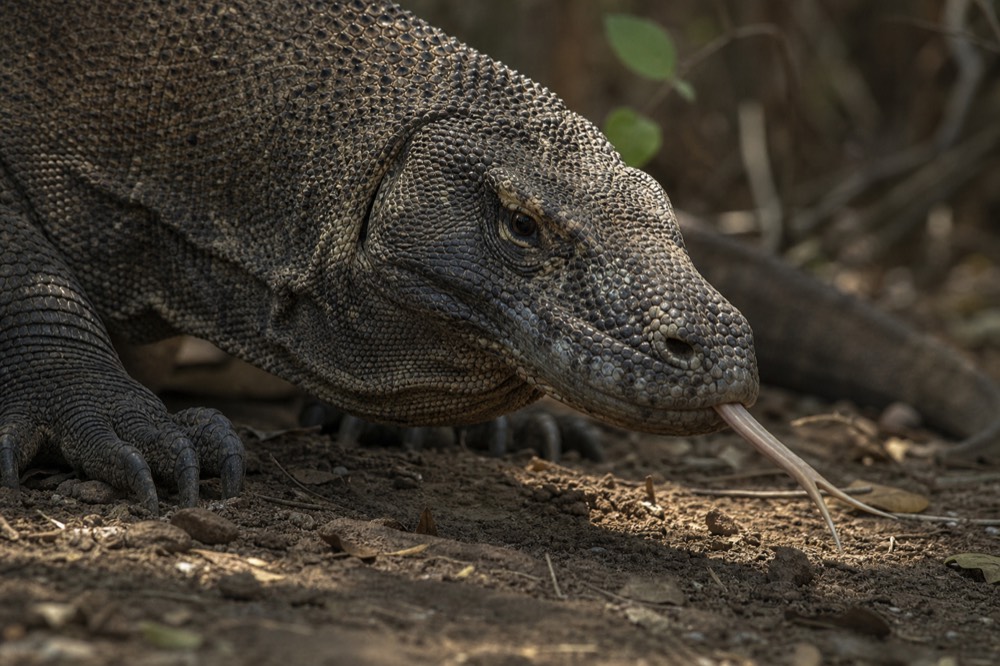
Komodo dragons are ambush predators that rely on a powerful sense of smell, detected through their forked tongue and a specialized sensory organ, patience, and a bite combining serrated teeth with confirmed venom that affects a prey animal's blood clotting, rather than sheer speed or a prolonged chase. That hunting style, wait, strike, then track a wounded animal over time, is precisely why the safety rules emphasize distance and scent management (no strong perfumes, no food smells) over anything related to outrunning a dragon, since outrunning was never really the relevant risk in the first place.
Does the time of year affect dragon behavior in ways that matter for a visit, beyond daily heat?
Beyond the daily morning-versus-midday activity pattern, dragons follow a broader seasonal rhythm tied to mating and nesting behavior around the middle of the year, which can mean somewhat different activity patterns at different points in the annual cycle, though rangers and guided walks operate year-round regardless. None of this is something a standard visitor needs to plan around specifically, unlike the manta ray upwelling season covered elsewhere on this site, dragon sightings aren't seasonally gated the way some marine wildlife encounters are, and a well-guided walk delivers a genuine chance at a sighting in any month.
How do the two ranger stations actually compare as places, beyond the walk itself?
Both Loh Liang on Komodo Island and Loh Buaya on Rinca have basic visitor facilities, a shaded waiting area, toilets, and a small information point, run by park rangers rather than built up as a tourist center, since the focus of both stations is managing guided access to the trails rather than providing an extended visitor experience on-site. Neither should be expected to have a shop or a cafe; nearly all of what you're there for happens on the trail itself, with the station serving as the starting and ending point for the walk and a place to regroup with your boat afterward.
What's the actual trail length and terrain difficulty for the standard dragon walk, compared to Padar?
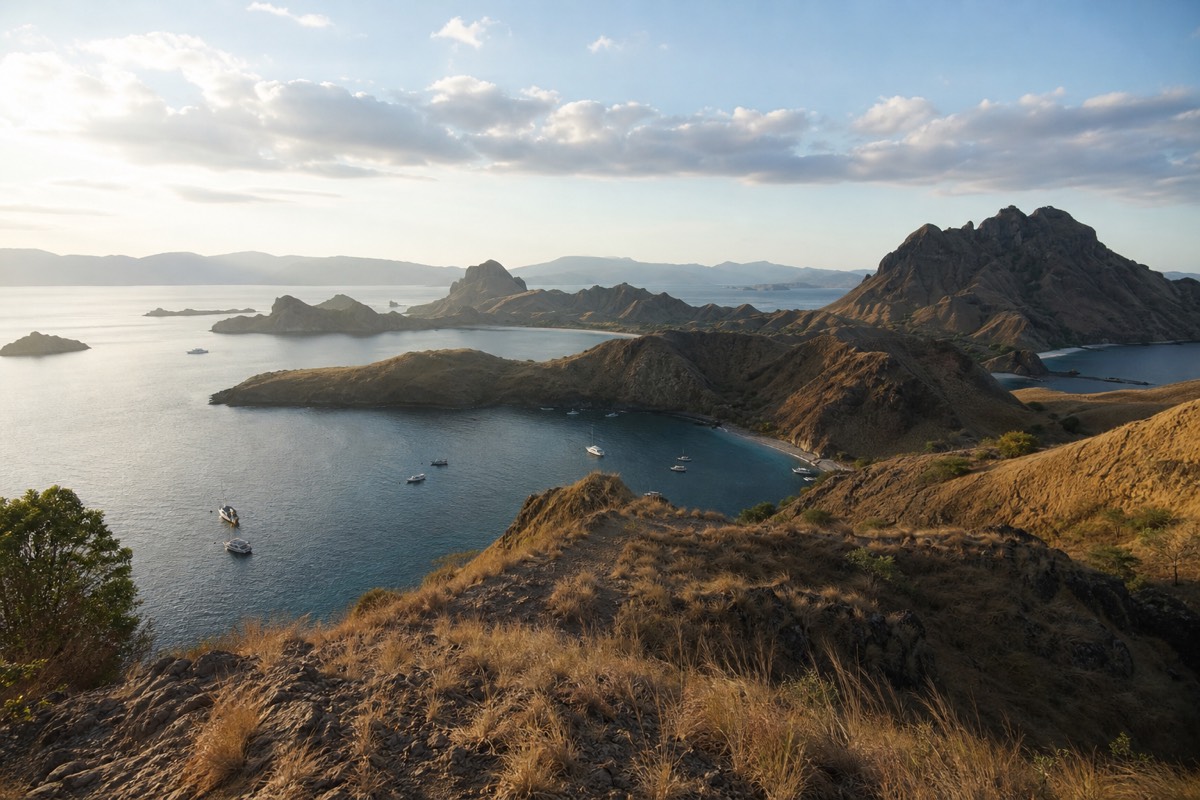
The standard ranger-led loop on either island covers a modest distance over largely flat to gently rolling terrain, nothing close to Padar's steep climb, which is why the dragon walk is accessible to a much wider range of fitness levels and ages than the park's more demanding hikes. Comfortable closed shoes and reasonable walking stamina are the only real physical requirements; there's no equivalent of Padar's steep, exposed section anywhere on the dragon-walk trails.
| Hike | Terrain | Physical demand |
|---|---|---|
| Komodo/Rinca dragon walk | Flat to gently rolling savanna and forest edge | Low to moderate |
| Padar Island summit | Steep, uneven, fully exposed | Moderate to high |
| Kelor Island hilltop | Short, moderate incline | Low to moderate |
What should first-time visitors expect emotionally from their first dragon sighting?
Most first-time visitors describe an initial moment of genuine surprise at the animal's real-world scale, photos and documentary footage rarely convey how large and physically imposing a wild dragon looks in person, followed by a settling calm once the ranger's managed distance and the animal's typically unhurried, lethargic daytime behavior become apparent. It's a common and entirely normal reaction, and part of why the guided structure, small groups, a trained ranger present throughout, matters as much for visitor comfort as for the safety rules covered in the dragon safety guide.
What's the realistic takeaway for someone deciding between Komodo Island and Rinca for their only walk?
If you only get one dragon-island visit, don't spend much energy agonizing over the choice: both islands deliver a genuine wild sighting under the same safety structure, and the practical routing of your specific tour, which almost always defaults to Komodo Island on a standard day trip, will likely decide it for you anyway. Save the deliberate choice between the two for a longer return trip, where you actually have the days to add both rather than pick one.
What should you do right after this walk, to make the most of the rest of your day?
The dragon walk typically sits mid-morning on a standard itinerary, between an early Padar climb and an afternoon beach or snorkel stop, so treat it as the pivot point of the day rather than the finish line. Reviewing photos, rehydrating, and mentally resetting for the water-based stops that follow is the practical use of the short transit time back to the boat, since the day's pace picks back up quickly once you're moving to the next stop.
What's the last thing worth reading before you book based on this guide?
The Komodo vs Rinca comparison if you're still weighing which island your longer trip should prioritize, or straight to the boat tour formats guide if a standard day trip to Komodo Island already sounds like the right call.
Final thought: is a dragon sighting genuinely likely, or is this overselling it?
Genuinely likely. Rangers work these trails daily and know the terrain well, and a quiet visit is the exception rather than the rule, so it's fair to book expecting a real sighting, not just hoping for one.