Padar Island Hike: What to Expect
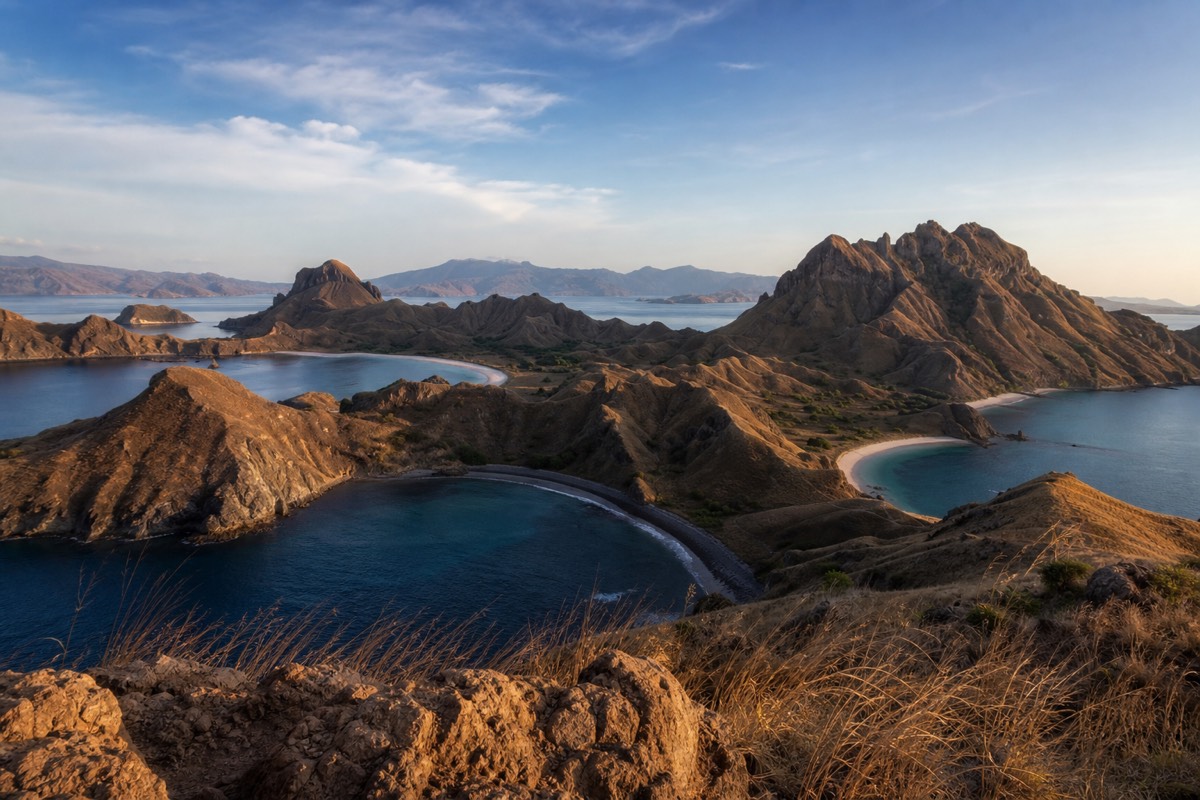
The photo you've seen of Komodo, three curved bays fanning out from a ridge, is Padar Island. Getting to that viewpoint means a real climb, not a stroll.
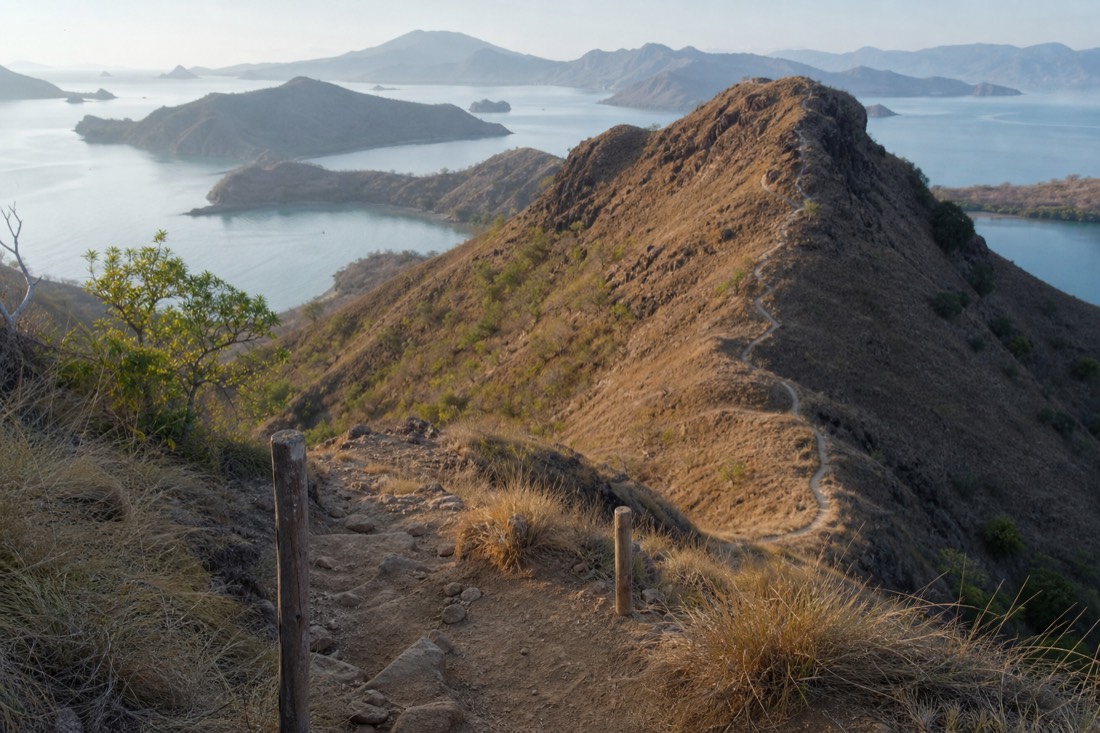
Padar Island's summit view is the single most-recognized image to come out of Komodo National Park: three bays, three different sand colors, fanning out below a bare volcanic ridge. What the photo doesn't show is the climb it takes to get there, or how much that climb changes depending on when you go.
Booking Choice: Reach Padar, Pink Beach and a ranger-led dragon walk on an 11-hour group day trip. Explore Early-Departure Komodo Group Speedboat
Start: Labuan Bajo. Confirm age rules and extras before booking.
What exactly is the Padar Island hike?
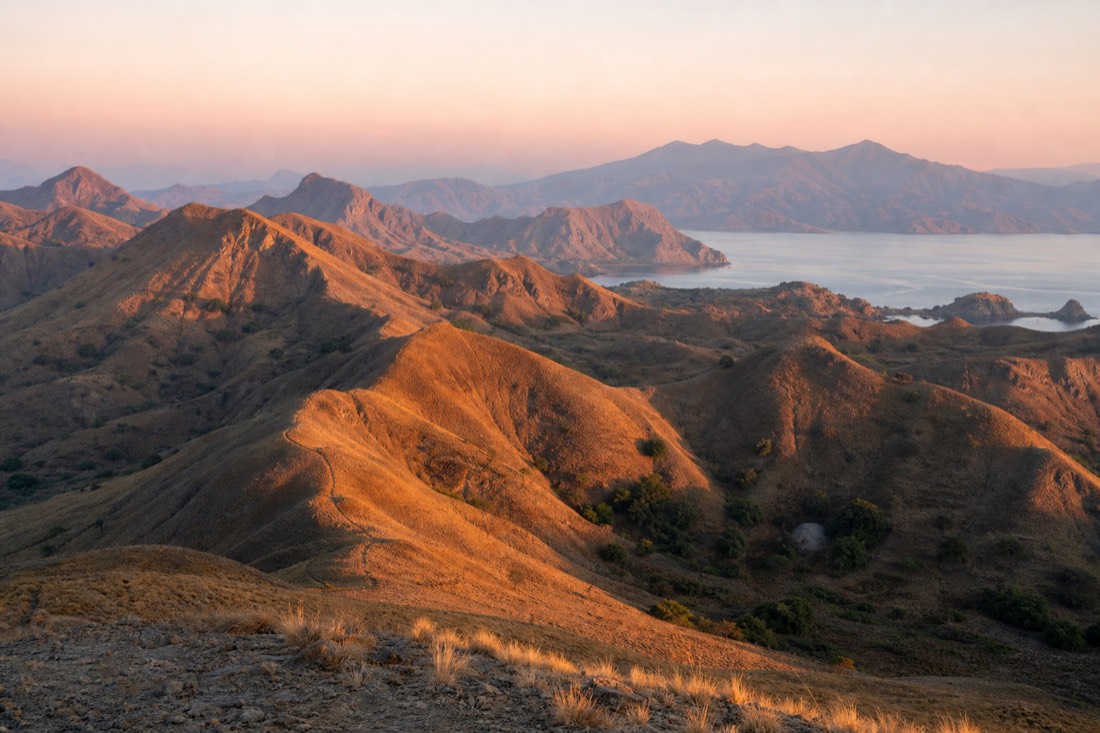
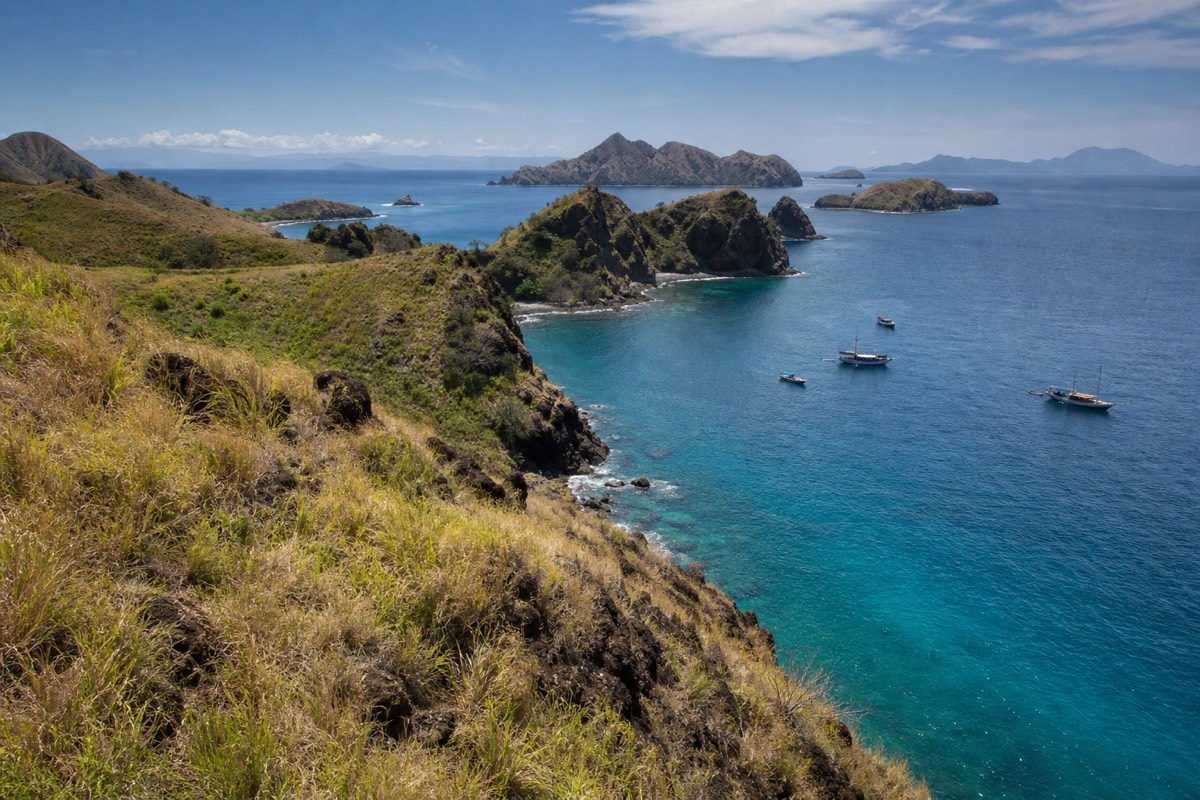
It's a steep but short trail, typically 20-30 minutes each way, climbing from the boat landing up a bare, dry ridge to a viewpoint overlooking Padar's three distinct bays, each with differently colored sand. There's no technical difficulty involved, no ropes or scrambling, but the combination of steep uneven steps, loose ground and full sun exposure makes it more demanding than the timing alone suggests.
| Detail | What to expect |
|---|---|
| Climb time (up) | 20-30 minutes at a steady pace |
| Terrain | Steep dirt trail, uneven steps, some loose ground |
| Shade | Minimal to none; full sun exposure throughout |
| Technical difficulty | None (no scrambling or equipment needed) |
| Fitness level needed | Moderate; steady walking pace over a short, steep climb |
Why is the view from the top so distinctive?
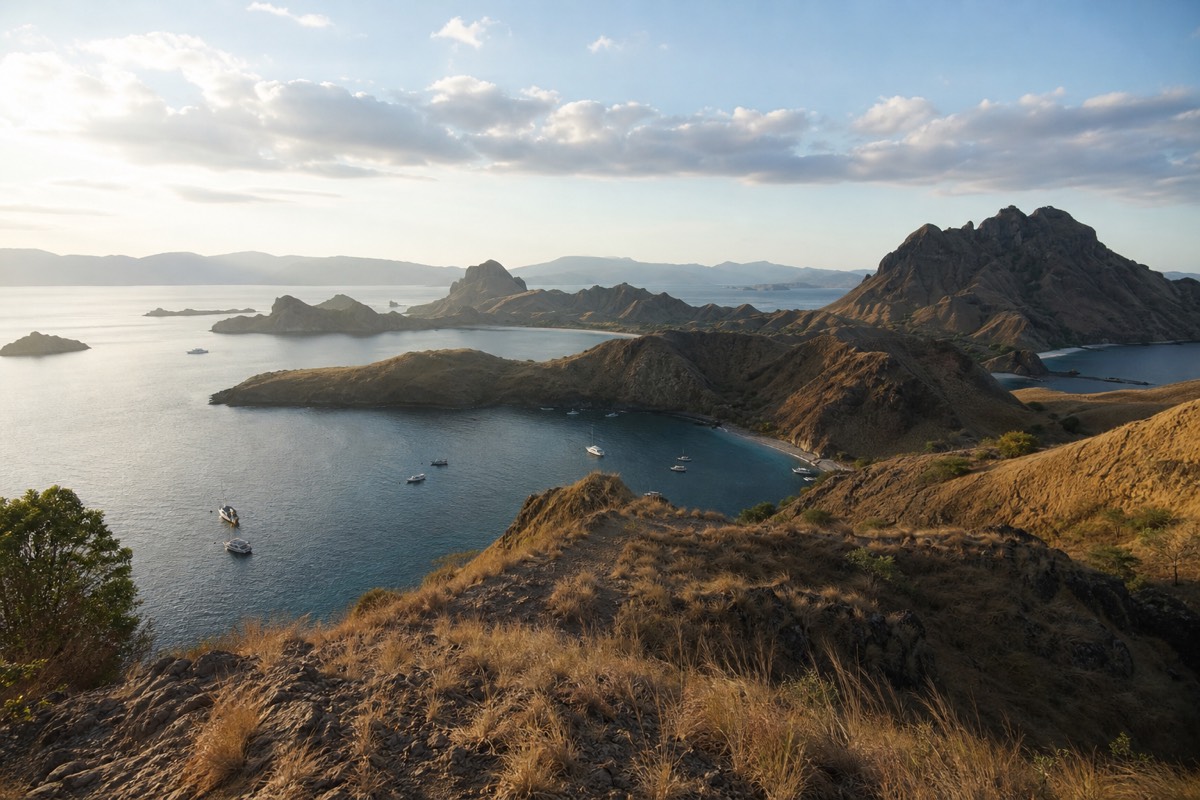
The summit viewpoint looks down over three separate bays at once, each with a visibly different sand tone, black, white and a pink-tinged shore, fanning out from the same ridge, which is a genuinely rare composition and the reason the image has become shorthand for Komodo itself. The layered dry hills behind the bays add to the effect, especially in the low-angle light around sunrise or late afternoon.
What time of day should you actually go?
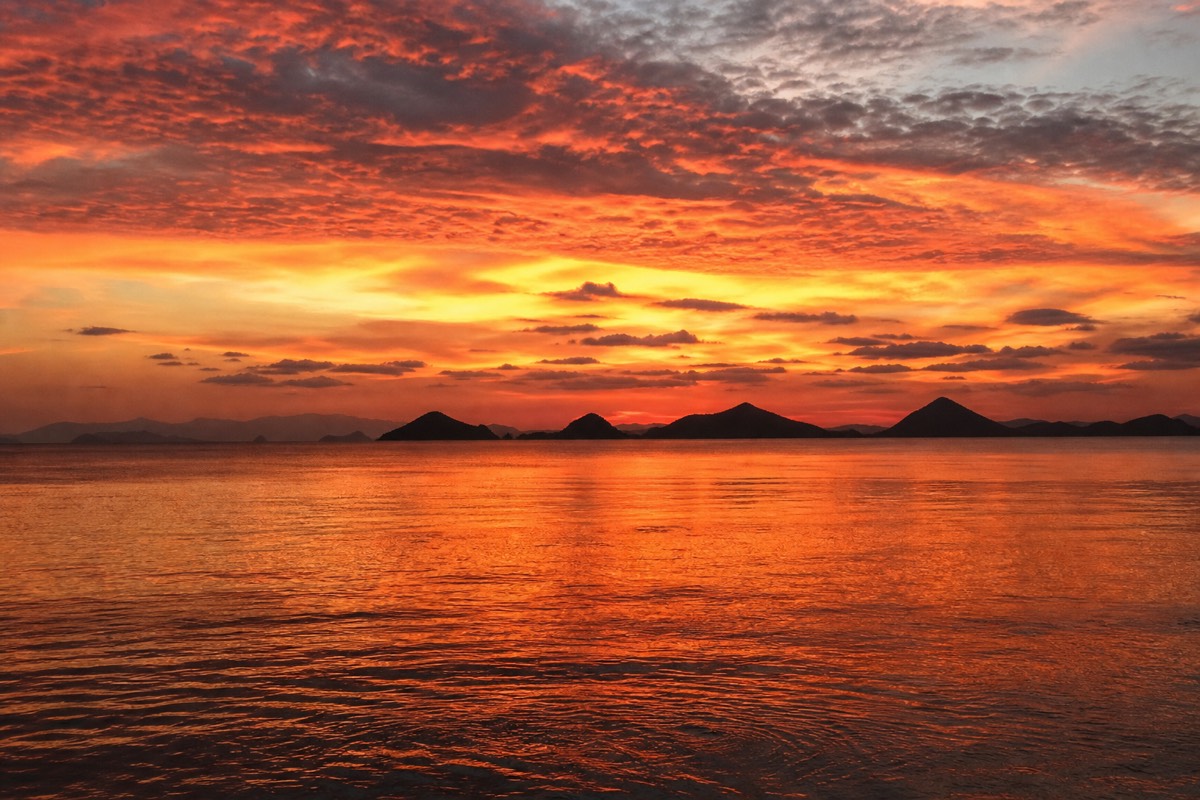
Sunrise is the strong recommendation from repeat visitors and most tour operators, both for the light and because the climb is meaningfully more comfortable before the heat builds. A midday climb in full tropical sun is a different experience entirely, more draining, less flattering light for photos, and typically more crowded as multiple tour boats overlap around the same hours.
| Time of day | Trade-off |
|---|---|
| Sunrise (pre-7am) | Coolest climb, best light, requires an early-bird departure |
| Mid-morning | Warmer, busier, still workable light |
| Midday | Hottest, most crowded, harshest light for photos |
| Late afternoon | Good light again, cooler than midday, less common on standard itineraries |
The early-bird speedboat tour on this site is built specifically around reaching Padar before the standard day-tour fleet.
What should you actually pack for this specific hike?
Closed, grippy shoes matter more here than on most beach-and-boat days, since sandals are a real slipping risk on the loose sections. Beyond footwear, the essentials are straightforward: water, since there's none available on the trail itself, sun protection given the total lack of shade, and a camera or phone with enough battery and storage, since this is the stop most people photograph the most.
| Item | Why it matters here specifically |
|---|---|
| Closed, grippy shoes | Loose ground and uneven steps on the climb |
| Water bottle | None available on the trail; heat builds fast |
| Sun hat and sunscreen | Zero shade on the exposed ridge |
| Light, breathable clothing | You'll be moving and sweating on the climb |
| Camera with a wide lens or phone panorama mode | The three-bay view is a wide composition |
Is the Padar hike suitable for kids, older travelers, or anyone with mobility concerns?
It's manageable for reasonably fit children with adult supervision, but several tour operators explicitly note it isn't recommended for elderly travelers or anyone with limited mobility, given the steep, uneven terrain and lack of handrails or rest points. If that's a concern for someone in your group, it's worth checking with the operator directly or planning for that person to stay aboard while others make the climb, a compromise several multi-day sailing itineraries can accommodate more easily than a single-day trip.
How does Padar fit into the rest of a typical day or trip?
Padar is almost always paired with Pink Beach and a Komodo dragon walk on the same itinerary, whether that's a single day trip or a multi-night liveaboard, and often one of the park's smaller named islands as well. The usual sequencing puts Padar first, while the morning is still cool, then moves on to the beach and wildlife stops as the day warms up.
How does Padar's climb compare to Kelor Island's easier hike?
Padar's trail is longer, steeper and more exposed than Kelor Island's shorter hilltop climb, which is why Kelor is often floated as the easier alternative for travelers who want a viewpoint without Padar's full effort, though the two views aren't really interchangeable. Padar's payoff, the three-bay panorama, is the more famous and more dramatic of the two; Kelor's is a gentler, single-bay view reached in roughly half the time.
| Factor | Padar Island | Kelor Island |
|---|---|---|
| Climb time (up) | 20-30 minutes | 10-15 minutes |
| Terrain | Steep, uneven, more exposed | Moderate, shorter exposure |
| View | Three distinct, differently colored bays | Single bay, neighboring islands |
| Typically included on | Most day trips and multi-day trips | Multi-day open trips and liveaboards |
What's the crowd bottleneck at the summit actually like?
The narrow trail and small summit platform mean that when multiple tour boats arrive in the same window, typically mid-morning on standard day trips, the climb and the viewpoint itself can feel genuinely congested, with hikers passing each other on tight sections and waiting for photo space at the top. A sunrise departure sidesteps nearly all of this, since the earliest boats reach the trail well ahead of the standard fleet.
| Departure timing | Crowd level at the summit |
|---|---|
| Sunrise / early-bird | Low; often near-empty for the first climbers |
| Standard mid-morning day trip | Highest; multiple boats overlap |
| Late afternoon (less common) | Lower, similar to sunrise but warmer |
Who should skip the Padar hike entirely?
Anyone with significant mobility limitations, uncontrolled vertigo on steep uneven ground, or a medical condition that makes exertion in full sun genuinely risky should skip this specific stop rather than push through it, and most operators will accommodate staying aboard while the rest of the group climbs. It isn't an all-or-nothing choice for the day, the boat, the beach stops and even the dragon walk (with a ranger's support) remain accessible even when the Padar summit itself isn't, which the is a Komodo tour worth it guide covers in more detail for different traveler types.
How steep is the trail, really, compared to a hike you might already know?
The Padar trail gains its elevation quickly over a short horizontal distance, which makes it feel more like a steep stair-climb than a gradual mountain trail, closer in character to a stadium-steps workout than a scenic countryside walk. There's no single stretch that requires scrambling or hand-holds, but the combination of loose gravel, uneven natural steps and that compressed climb rate is what surprises visitors who expected something gentler based on the "20-30 minutes" duration alone; duration undersells the effort here more than on almost any other stop in the park.
For context, it's a shorter but noticeably steeper effort than Kelor Island's easier hilltop climb, and a completely different category of exertion than any of the park's beach or snorkel stops, which involve essentially no physical effort at all. Travelers who regularly do stair-climbing workouts or moderate hill hikes at home will find it manageable; those without much recent hiking experience should pace themselves and expect to stop for breath once or twice along the way, which is entirely normal and doesn't mean you're doing it wrong.
What's the actual descent like, and does it get overlooked in planning?
Going down is faster than going up, typically 15-20 minutes, but the same loose gravel and uneven steps that make the ascent tiring make the descent the point where most minor slips actually happen, since knees and footing take more strain heading downhill than climbing. Grippy, closed shoes matter as much or more on the way down as on the way up, and rushing the descent to beat the heat or catch up with the group is the most common reason for a stumble.
| Direction | Time | Main risk factor |
|---|---|---|
| Ascent | 20-30 minutes | Cardio effort, heat, exposure |
| Descent | 15-20 minutes | Footing on loose gravel, knee strain |
How does the crowd and light change if you do the hike at sunset instead of sunrise?
A late-afternoon climb, less common on standard itineraries but sometimes available on multi-day trips with flexible timing, trades sunrise's cool air for softer, warmer evening light and generally thinner crowds than the mid-morning peak, without requiring the pre-dawn wake-up sunrise demands. It's a legitimate alternative for travelers who genuinely can't manage an early start but still want to avoid the harshest midday conditions, and it's worth asking on a budget liveaboard from Labuan Bajo whether a sunset Padar stop fits their route, since it isn't the default on most itineraries the way sunrise is.
Is there any real fitness prep worth doing before your trip if the climb worries you?
You don't need to train specifically for this hike, but general everyday fitness, comfortable walking a few flights of stairs without stopping, translates directly to a more comfortable Padar climb, so travelers who know they're currently sedentary and worried about the effort genuinely do benefit from a few weeks of light stair-climbing or hill-walking before the trip. This isn't about building serious hiking fitness, it's about making sure a 20-30 minute steep climb in tropical heat doesn't come as a total shock to a body that hasn't done anything like it recently.
| Current fitness level | Realistic prep |
|---|---|
| Regularly active, comfortable with stairs/hills | No specific prep needed |
| Generally sedentary, some concern about the climb | A few weeks of light stair-climbing or hill walks |
| Significant mobility or cardiac concerns | Talk to a doctor before committing; consider skipping this stop |
Does the view actually differ along the trail, or is the summit the only worthwhile stop?
The summit delivers the full three-bay panorama that made Padar famous, but the trail itself offers a couple of worthwhile lower viewpoints along the way, useful rest points that still deliver a real view for anyone who decides partway up that the full summit isn't for them that day. These aren't secret alternate routes, they're simply natural pause points on the same single trail, and guides are generally accommodating of a traveler who wants to stop at one of these rather than push to the very top, without treating it as a failed attempt.
What does the boat-landing and approach to the trailhead actually involve?
Boats typically anchor a short distance offshore and transfer visitors to the beach by a smaller tender or, on calmer days, a direct beach landing, before the trail itself begins climbing almost immediately from the shoreline. There's little flat warm-up before the incline starts, which is worth knowing so you don't mistake the first steep stretch for an unusually hard section, it's simply how the trail is shaped from the very first steps.
| Stage | What to expect |
|---|---|
| Boat to shore | Tender transfer or direct beach landing, weather-dependent |
| Trailhead to first viewpoint | Climbing begins almost immediately |
| To the summit | Continued steady climb, no flat rest sections |
How does group pacing actually work if some hikers are much faster than others?
Guides generally let stronger hikers move ahead to the summit while staying with or checking back on slower members of the group, rather than forcing the whole group to move at the pace of its slowest member the entire way. This means a mixed-ability group doesn't need to hold back its faster members, and slower hikers shouldn't feel pressured to match a pace that doesn't suit them, since the trail's fixed, single-path layout means a guide can reasonably track a spread-out group without anyone getting lost.
Is Padar worth doing twice on the same trip, at different times of day?
A small number of multi-day itineraries with flexible timing do offer a second Padar stop, and travelers who've done both a sunrise and a later climb consistently describe them as different enough in light and crowd level to justify it, though it's a genuine extra rather than something to expect as standard. For most travelers on a single-day or short trip, one well-timed climb, ideally sunrise, delivers the full experience without needing a repeat visit to feel complete.
What's the honest closing verdict on whether this hike lives up to its reputation?
Yes, and by a wide margin among travelers who've done it: the effort-to-payoff ratio here is unusually favorable compared to most hikes marketed as must-see viewpoints, since the climb itself is short even if steep, and the reward, a genuinely unique three-bay panorama found nowhere else, delivers on the hype rather than merely living up to a well-marketed photo.
What should you read next to plan the rest of your day around this hike?
Pink Beach and the Komodo dragon walk almost always bookend Padar on the same itinerary, both covered in their own guides on this site, alongside the best time to visit guide if you're still choosing your travel month.